Thursday, 19 August 2010

SAS: Al-Qaida Attaque! # 1
by Gerard De Villiers

(Editions Gerard De Villiers, 2008)


Walking to Brockley one morning last month, I found a whole stack of these things, piled outside somebody’s front gate next to the bins.

I would have snagged the lot, only I was with some new friends from Denmark who were staying with me at the time, and thought I’d best spare them that awkward feeling you get when you’ve arrived in a foreign country for a week and your host suddenly starts scooping armfuls of sleazy abandoned paperbacks off the pavement. I grabbed the top one off the pile and made a mental note to head back later and investigate, but alas, by that evening they’d all vanished.

Most of the books had far more salacious cover designs than this one, all featuring variations on the theme of sexy Muslim ladies with machine guns.

Not being a French speaker, I have no further clue what the hell this is all about (beyond the obvious), but it sure is nice to find the spirit of lurid girls n’ guns pulp cover design alive and well outside the English speaking world.

Astonishingly, the inside cover reveals that when this volume was published in 2008, there were no less than 170 books in this “SAS” series, all bearing the Gerard De Villiers name. So if I felt a vague twinge of unease just now using the phrase “sexy Muslim ladies with machine guns” on my blog, imagine the balls it must take for these guys to churn out books on the subject at the speed of something like ten a month, helpfully leaving the address of their Paris office on the opening page.

Actually though, googling up some more of these covers, I note that relatively few of them seem to go in for obvious Muslim/terrorist imagery; perhaps the cover photo on the one I’ve posted above is unusually restrained for precisely that reason..?

Thankfully, such issues of cultural sensitivity don’t seem to have stopped ‘Editions Gerard De Villiers’ from scouring the world in search of other instances of violent conflict that can be explored via the medium of sexy ladies with machine guns;


Man, I *love* that “Furie a Belfast” cover. Is she supposed to be a swinging, catsuit-clad Catholic nun-assassin or something? What wonderful, ridiculous stuff.

Sunday, 15 August 2010

Petitionage.


It has come to my attention that over the past forty eight hours, this blog’s number of followers has nearly tripled. Which is… cool. Apparently Blogger has selected me as a ‘blog of note’. That was nice of them – cheers to whoever was responsible.

I hope that some of you new readers like what I’m doing enough to stick around. It’s all fairly self-explanatory I suppose. There are films, which I watch, and talk about. There are books, which are mainly things I’ve found in charity shops that appeal to me because they have striking/exciting/weird cover designs, although recently I’ve started writing short pieces about authors whose work I’ve actually been reading too (in a genre fiction context at least). Sometimes I might post videos of short films or trailers of note; sometimes I may do other things, who knows. But that’s basically yr lot. Music I do on my other blog.

Anyway, the point of this post was initially going to be to draw people’s attention to the banner above, which I initially saw on Celluloid Highway the other day. I can't be bothered to figure out how to make the image link to the petition as stated, but here's a link.

I guess it’s fair to say it’s probably something like the 500, 000th most important issue one could conceivably sign a petition about, but still, when it comes to causes I can whole-heartedly get behind, “getting old horror movies shown on the BBC again” probably ranks up there with eliminating world hunger, restricting international arms trading and letting the children boogie.

Because, well… I won’t launch into my standard diatribe about how TV’s become so worthless I don’t even own one anymore, but man, up until a few years ago, the BBC used to show some GREAT stuff late on Saturday nights. In fact, it’s stuff I first saw in that magic slot after Newsnight Review that is perhaps chiefly responsible for turning me into an active fan of horror/cult films, rather than just a passive ‘yeah, they’re pretty cool’ consumer. It was on late night TV that I first saw “Psychomania”, Michael Reeves’ “The Sorcerers”, John Gilling’s “The Night Caller”, Anthony Balch’s “Horror Hospital”, “Incense For The Damned”, “Plague Of The Zombies”, the list goes on – all fantastic films, many of which are unavailable on domestic DVD to this day. And even when nothing especially mind-blowing turned up, the opportunity take in as much of “Lust For A Vampire” or “Scream And Scream Again” as I could before I drifted off to sleep is one that all lonely, penniless young people should be able to avail themselves of after the pubs close on a weekend.

Despite the subsequent digital TV ‘revolution’, there’s now nowhere that shows this stuff, or anything remotely comparable re: worthwhile old movies. Surely digging ‘em out of the vaults can’t be any more expensive than buying in more shitty made-for-TV thrillers from America? How else will our children learn about ritual decapitation, the occult properties of graveyard toads and whether or not Joan Collins stands a chance against a psychopathic Santa Claus?

So, er, yeah. You get the picture.

Thursday, 12 August 2010

Stone
(Sandy Harbutt, 1974)


“All law is based on violence, man, and any cat who breaks the law gets clobbered. Only difference is, our law only applies to us. Your law sends young blokes to somebody else’s country, to fight people they know nothing about. As long as you keep on shootin’ em, they hang medals on you. When you won’t shoot ‘em any more, they shut you in jail. And now somebody’s knocking off our mates, and you tell us we’re not supposed to do anything about it? That’s bullshit man.”
- The Undertaker

“Stone is a trip”, the ads promised, and for once they weren’t kidding.

I watched ‘Stone’ for the first time last month, at the end of a pretty exhausting day spent lugging a heavy backpack & guitar-case around the outskirts of Cambridge in relentless mid-summer sunshine and making my way home via rush hour public transport.

After dinner and a much-needed shower, I still had a couple of hours of the evening left for a movie, and figured something pretty fun and easy-going with just a bit of a kick to it to keep me interested was the way to go. What’s that you say? Cult Australian biker flick from the early ‘70s? Sounds like just the ticket! So I poured myself a tumbler of whisky for slow sipping, and settled down for some quality time with “Stone”.


The movie opens, in hilariously literal fashion, with a close-up of a stone – a boulder engraved with a plaque commemorating the founding of New South Wales. An eerie, high pitched vocal drone plays as the camera shakily pans out, revealing an over-saturated, hyper-real landscape as two kids on bicycles cycle past in background. Panning close to 180 degrees across a deserted, windswept bay, the camera hones in on a bright, red sign reading “NO SWIMMING – EXTREME POLLUTION”, and stays there, as ear-splitting electronic feedback floods the soundtrack. We’re not in Kansas anymore.

Twenty minutes later, I paused the movie, went to the kitchen and got the rest of the bottle. It was gonna be that kind of night.


In those twenty minutes, I had witnessed:

• Hugh Keays-Byrne (Toecutter from ‘Mad Max’) freaking out on LSD (trippy camera-work on overdrive) amid a maze of brutalist imperial architecture and stumbling upon a sniper preparing to make a hit.

• Said sniper bloodily gunning down an environmental campaigner as he addresses a rally – slo mo, screaming faces of fleeing hippies as the body falls.

• A classic wire-stretched-across-the-road biker decapitation, like the one in HG Lewis’s ‘She Devils On Wheels’.

• The most extrordinary piece of driving-over-cliff-edge stuntwork I’ve seen in my life.

• An awe-inspiring biker funeral procession, in which about one hundred riders in mirror-visor helmets ride in precision down a deserted highway, following a specially converted low-rider/sidecar thing bearing the coffin… with the dead man’s helmet sitting on top of it.

• A funeral service in a bucolic cemetery full of bright yellow poppies, that begins with a bikie priest in a top hat, cape and an eye patch yelling “SAAAATAAAN!!!” at the top of his lungs…

• …. before he explains that they’re burying the poor guy upright, “so that ya won’t have to take anything from the evil one lying down”!

• All of the above accompanied by the wildest, most disjointed collection of noise-saturated acid rock-meets-avant garde soundtrack music I’ve ever heard.


Clearly, one shot director Sandy Harbutt must have approached ‘Stone’ in either complete ignorance or conscious denial of David Friedman’s famous ‘sizzle not the steak’ maxim for exploitation filmmaking. Instead, he seems to have been determined to make a meteor-strike sized impression on the nascent Australian film industry by any means necessary, delivering a movie so loaded with hyperkinetic action, raging counter-cultural fury and audio-visual overload that it not only lives up to the hyperbole of it’s ‘70s drive-in style publicity campaign, but actually surpasses it, roaring off into unknown vistas of two-fisted lunacy, leaving the poster designers standing.


I probably won’t be mortally offending many movie fans if I suggest that the glut of American biker movies that emerged in the genre’s golden age in the late ‘60s were, by and large, pretty crappy. That’s not to say I don’t still find them endlessly entertaining and wouldn't happily watch pretty much any of them at a moment’s notice of course, but y’know what I mean. Even the best ones were pretty bottom-of-the-barrel fare in the wider scheme of things, and god help anyone who sits down to watch ‘Hells Angels On Wheels’ or something with high expectations.

We can probably safely assume that whoever it was who once declared Al Adamson’s “Satan’s Sadists” to be “the Citizen Kane of biker movies” (see: every DVD release of that movie ever) must have been either an abject simpleton or stoned out of their freakin’ mind, but nonetheless, the fact that an Al Adamson movie could ever conceivably be hailed as the Citizen Kane of ANYTHING probably tells you something about the overall level of quality within the biker sub-genre.


If there is to be a “Citizen Kane of biker movies” though, then fuck it – I vote ‘Stone’. It may have been made a few years too late on the other side of the world, but if the aforementioned critic is still out there somewhere searching for a film that applies the audacity, innovation and artistic vision of a young Orson Welles to the tale of a bunch of unwashed guys in leather riding around and getting wasted… well this is about as close as you could hope to get. Throw in the fact that ‘Stone’ is also just plain mad as a bag of snakes, and we have a movie that almost challenges Don Sharp’s immortal ‘Psychomania’ for the coveted position of the Number # 1 All Time Weirdo Biker Movie.

Which means I should try to tell you more about it I suppose, but where to begin…?


Boiled down to humble plot synopsis level, ‘Stone’ doesn’t really differ that much from yr average biker flick, I suppose. Our protagonists here are The Grave Diggers. Led by Harbutt himself as formidable leader The Undertaker, the gang also includes Keays-Byrne as loose cannon Toad, Vincent Gil as ‘spiritual advisor’ Dr. Death (he was the one conducting the funeral), and a whole troop of other salty dogs from weirdo central casting (ozzie division) portraying such lovable rogues as ‘Stinkfinger’, ‘Zonk’, ‘Pinball’ and ‘Captain Midnight’. And in essence, The Grave Diggers basically spend most of the movie doing what convention dictates biker gangs are supposed to do - riding around aimlessly, hassling squares, giving the cops the runaround, starting brawls, getting high, carousing with their ‘mamas’ and waxing lyrical about the outlaw lifestyle and the freedom of the road.


It appears that, for reasons that still kinda elude me after two viewings of the movie, some high-powered bad guys are trying to kill off The Grave Diggers. I’m not sure whether they’re sorta gangster property developers who want to claim the gang’s hideout, or whether it’s got something to do with the members of the gang who witnessed the assassination of the environmental campaigner in the opening sequence, or a little bit of both? Anyway, as a result of all this, the local cops send Stone (Ken Shorter), their resident suave, maverick man of action guy, to infiltrate the gang and find out what’s going on. Surprisingly, the Diggers decide to let Stone ride with them after he saves some of their lives during an explosive-tipped cross-bow attack (?!), and he soon finds himself learning the ways of the outlaw bikie.


We know Stone must be a suave, maverick man of action guy, partly because he’s a cop with long hair in 1974, and partly because he lives in a beach house with a hot international supermodel who expresses her displeasure at his “always pissing off on these boy scout adventures”. But sadly, Shorter lets the film down pretty badly, sleepwalking through his scenes and appearing utterly devoid of the charisma his character demands. (It’s just as well the rest of the cast cover for him by going so overboard it scarcely matters.) And as it turns out, I’m not sure Stone really ever DOES find out what’s going on, as from this point on the film more or less degenerates into a long series of disjointed escapades and violent showdowns with coherent plotting but a distant memory… but everybody has a wild old time, and that’s what matters, right? It’s hard to get too hung up on plot deficiencies when watching a movie in which the entire cast get stoned and go skinny-dipping together at dawn, with the director, co-writer and composer leading the pack.


Probably not the most enthralling plot synopsis you’ve ever read I’m guessing, but beyond that, what can I say…. every detail of “Stone” is just so different, so much more lively, crazy, ENGAGED (mm, good adjective) than any other biker movie I’ve seen. Beyond Sandy Harbutt’s obvious dedication to the cause of making a fucking good movie, perhaps the key to ‘Stone’s singularity lies its emergence from a culture and set of circumstances far removed from the other entries in the genre.

I mean, is it just me, or has Australia always fostered a certain element of eccentricity and extremity in it’s manifestations of youth sub-culture? Maybe it’s something to do with the harshness of the landscape, the relative isolation, I dunno, but just watch this footage of Melbourne ‘Sharpies’ hanging out the same year ‘Stone’ was being filmed over in Sydney, and you’ll see what I mean. It’s perhaps not too much of a stretch to see movements like that as a precursor to the random punkoid lunatic gangs seen in ‘Mad Max’ and the subsequent rash of dystopian desert flicks, and even Richard Lowenstein’s celebrated Melbourne punk scene drama “Dogs in Space” gives a distinctly post-apocalyptic air to the lifestyles of its teen drop-out characters.


‘Stone’ fits proudly into this outsider lineage, presenting its own unique take on the biker – sorry, BIKIE – mythos. Unlike the uniform Harleys and unprotected heads of their American counterparts, the bikies in ‘Stone’ ride sleeker, more modern Kawasakis (hey, cheaper to import I guess) painted in bright primary colours, and wear black, mirror-visored helmets, giving them a menacing, anonymous look that would go on to be echoed by whole legions of warriors and bad-asses in subsequent action and sci-fi movies.

Within the limited visual palette of the biker movie, these minor aesthetic differences play a huge role in creating ‘Stone’s visual impact, instantly setting the movie apart from its genre contemporaries, just as much as the art-damaged directorial style and lunatic soundtrack.


Speaking of which, I can’t go any further without a few words on the soundtrack, which is… how best to put this? ‘Absolutely fucking bananas’ just about covers it, I think. Queasy, assaultive assemblages of multi-layered noise and howling echo chamber mentalism that sound more like a ‘90s Japanese noise record than a ‘70s movie soundtrack; blazing, jazz-infected heavy psyche blowouts; sweeter, more biker-flick appropriate bar-room rock grooving; swirling, psychedelicised folk guitar picking; utterly indescrible mixtures of shuddering bass feedback, lurching electronic farting and droning didgeridoo; a deranged hard rock reworking of Dylan Thomas's "Do Not Go Gentle"; you name it, ‘Stone’s got it.

Music credits are limited (rather awesomely) to “rock n’ roll by Billy Green”, but assuming Mr. Green was indeed responsible for all the noises herein, he certainly expanded on his stated remit pretty considerably, even given the widest possible definition of ‘rock n’ roll’. In addition to all of the above, there are even moments (such as the funeral procession) where he changes tack entirely, laying down some beautifully austere, modernist string pieces and faux-classical vamps, each time letting them gradually slide back into the realm of whacked out rock, as bass and drums slowly cleave into the mix – a neat trick that’s utilised several times over.


To think that all this madness is the work of one man frankly boggles the mind, but hey: rock n’ roll is by Billy Green. Who are we to argue? (Green also turns up in the movie, playing ‘69’, the silent biker who is often seen strumming a guitar, and sleeps next to his amp.) To call this soundtrack - recently reissued on the endlessly amazing Finders Keepers label - ‘innovative’ or ‘eclectic’ would be something of an understatement, and the music’s unhinged bravado matches Harbutt’s style of film-making perfectly.


Whereas most American biker flicks pay lip service to an ‘outlaw’ philosophy whilst simultaneously portraying their characters as simpleminded stoners and layabouts, Undertaker’s gang are a little more, well, committed to their chosen lifestyle. Sure, the Grave Diggers do their fair share of getting stoned and lazing around, but rather than just roaming around aimlessly and avoiding the fuzz, these guys are more actively concerned with maintaining a situation that allows them to exist on their own terms.


The gang live together in a fortress – some kind of ex-military clifftop bunker? – and keep armed guards on duty. In fact, they seem to have a pretty formidable arsenal, and a willingness to use it when threatened. They live communally under the joint guidance of Undertaker’s strict anti-authoritarian philosophy and Dr. Death’s semi-serious Satanic rituals, and, as they repeatedly state, they’re not going to take any shit from the pigs, gangers or anyone else. A more can-do bunch of post-‘60s radicals you’d be hard-pressed to find anywhere in movies, let alone in real life; Abbie Hoffman and John Sinclair would be proud.


Actually though, there’s something slightly uncomfortable about the film’s relentless idealisation of the bikie lifestyle. This idealisation continues even as they give people a hard time, casually man-handle their ladies, beat the shit out of complete strangers etc, and at several points even sees the gang’s victims/enemies grudgingly admit that they’re ‘cool guys’, denying the film even a routine b-movie level of conflict or ideological question-raising.

Perhaps it’s no surprise to learn that Sandy Harbutt himself was a dedicated bikie, and that ‘Stone’ can be seen at least in part as a wildly exaggerated celebration of the lifestyle he was immersed in at the time. I mean, I’m assuming that Harbutt and his mates probably didn’t actually go around trashing bars, worshipping Satan, staging elaborate funeral processions and orchestrating climatic machine gun battles with criminal gangs, but the real key to what makes “Stone” such exhilarating viewing I think is Harbutt’s unique, almost contradictory, mixture of bizarre pop art excess and ground level realism.


The former aspect we’ve already covered in detail, but how often do we find a film in which such garish and outlandish situations are presented in such a no bullshit, shot-from-the-hip fashion?

Obviously most of the film’s principals (Shorter, Keays-Byrne, Gil) are professional actors, but when we get to the second tier bikies and assorted extras, it’s pretty hard to tell who’s a professional and who’s.. y’know, just a dude essentially playing him/herself. In the excellent Ozploitation documentary Not Quite Hollywood, interviewees recall that for the ‘Wild One’-esque sequence in which the Grave Diggers scuffle with a rival bikie gang, Harbutt did actually get members of two rival gangs together, waited until they got juiced up, and had his crew filming as things naturally kicked off.


All of the stunt and bike-racing footage meanwhile has a brilliant, unfakeable seat-of-yr-pants quality to it that speaks of cameras wedged on dashboards, wielded by passengers, swung across the road etc, as guys genuinely speed around like loons.

You know that incredible bike stunt I mentioned earlier, in which we see a guy driving a bike over the edge of a hundred foot high cliff straight into the ocean at top speed? Well there’s no dummy or trick editing there. What we’re seeing is legendary Australian stuntman Peter Armstrong, driving a bike over the edge of a hundred foot high cliff straight into the ocean at top speed.


Interviewed in ‘Not Quite Hollywood’, he says he passed out on impact with the water and nearly broke his back, but he reckons the shot was worth it. And not that I’m any cheerleader for reckless endangerment of life, but I’m inclined to agree – the result is more jaw-dropping than any amount of CGI-heavy action movie goonery.

I probably don’t even need to point out what a vast impact this combination of wild n’ woolly automotive carnage and bright, flawless cinematography had on Australian cinema in the decade following ‘Stone’s release, and on George Miller’s ‘Mad Max’ in particular. (Perhaps there was even more crossover between the two films than merely sharing a visual style and a few actors – I couldn’t help but notice that ‘Stone’ features a character called “Bad Max” who’s referred to several times but never appears on screen..?)


Action scenes aside though, EVERYTHING in Harbutt’s film is shot with a try-and-fucking-stop-me intensity that speaks of a genuinely driven director, from crowd scenes and brawls that play out like extracts from one of Peter Watkin’s quasi-documentaries to mind-raping psychedelic freakouts, to vistas of the kind of serene, terrifying beauty that directors like Nicholas Roeg and Peter Weir have also been able to capture in the Australian landscape.

However vague and unsatisfying ‘Stone’ may be on an intellectual or narrative level, you won’t notice whilst watching it. As a piece of pure cinema, it’s an absolute knock-out - self-defined, punk rock film-making at its finest.

Thursday, 5 August 2010

“Happy…? Long ago I knew what it meant to be happy..”


Incongruous as it may seem for a blog mainly dedicated to horror and weirdness, Shaun of The Celluloid Highway has seen fit to bestow a Happy 101 award upon Breakfast In The Ruins. Thanks dude, much appreciated!

It’s another of those chain letter blog award things that I just can’t say no to, and the rules are pretty straight forward: list ten things that bring me joy, and designate ten favoured blogs to pass the award on to.

Right, this shouldn’t take long…

JOY:


1. The Ramones.

2. Fuzz pedals! And dissonant, crazed guitar noise in all its many and varied forms.

3. John Carpenter! Just, y’know, for everything… but, recently, for this in particular.

4. A fucking good loaf of bread! As made in a bakery, by a baker. Can’t beat it.

5. Betty & The Werewolves!

6. The fact that I have tickets to see Jonathan Richman play in a pub down the road from my house in a couple of months!

7. The fact that there are hundreds of Japanese delinquent girl gang movies out there, and I’ve only seen, like, one!

8. Booze! You don’t think I watch all these movies sober, do you? Real ale, half decent red wine or a straight glass of single malt – beyond that, I’m not fussy.

9. H.P. Lovecraft! Where would I be without the formative influence of this reclusive old bigot and his strange imaginings? Happy and successful and not scribbling weird junk on the internet, probably.

10. Godzilla! It makes me so happy every time he lumbers across the screen like a big doofus with a hangover, looking for breakfast, wishing life would just stop fucking with him for a minute.

11. Barbara Steele! The one and only.


12. ‘Black Hole’ by Charles Burns and ‘Hate’ by Peter Bagge! Two comic books I never tire of looking at. Probably best not think too hard, re: why.

13. All Ages Records, on Pratt Street NW1, and Up the Video Junction in Camden Market! undoubtedly the two best shops in London when it comes to serving my particular cultural needs, and I only recently discovered they’re both run by the same people! God bless them and their friendly, endlessly enthusiastic, cool band starting, exemplary shop-keeping ways – long may I continue to give them my money in exchange for neat stuff.

How many’s that? Thirteen? Shit, close enough.

BLOGS:


Last time I had one of these awards, I tried to do non-film related blogs, so, this time around, ten of my favourite film blogs:

Acidemic
Bangalore Film Society
Cavalcade of Perversions
Cult Movie Reviews
Die, Danger, Die, Die, Kill!
House of Self-Indulgence
Lost Video Archive
Love Train For The Tenebrous Empire
Monster Movie Music
Quiet Cool

They're all pretty super.

Monday, 2 August 2010

The Great God Pan and The Inmost Light by Arthur Machen
(John Lane editions, 1894)


“Look about you, Clarke. You see the mountain, and hill following after hill, as wave on wave, you see the woods and orchards, the fields of ripe corn, and the meadows reaching to the reed beds by the river. You see me standing here beside you, and hear my voice; but I tell you that all these things - yes, from that star that has just shone out in the sky to the solid ground beneath our feet - I say that all these are but dreams and shadows: the shadows that hide the real world from our eyes. There is a real world, but it is beyond this glamour and this vision, beyond these ‘chases in Arras, dreams in a career,’ beyond them all as beyond a veil. I do not know whether any human being has ever lifted that veil; but I do know, Clarke, that you and I shall see it lifted this very night from before another’s eyes. You may think all this strange nonsense; it may be strange, but it is true, and the ancients knew what lifting the veil means. They called it seeing the god Pan.”

Clarke shivered; the white mist gathering over the river was chilly.

“It is wonderful indeed,” he said. “We are standing on the brink of a strange world, Raymond, if what you say is true. I suppose the knife is absolutely necessary?”

-----

Although unburdened for the most part by conventional literary merit, the fifty pages of Arthur Machen’s ‘The Great God Pan’ somehow remain unique, and indeed shocking, reading, over a century after they were composed.

Now clearly I don’t ACTUALLY own an original edition of ‘The Great God Pan’ with Aubrey Beardsley cover illustration, but the great Welsh mystic writer has been on my mind a lot this week, so it seems a good opportunity to post some covers to his work that are more worth looking at than the volumes I do own.

Firstly, I was thinking on Machen because I’ve been reading S.T. Joshi’s The Weird Tale, which begins with an essay on his work. A nice drive through the rolling hills of Brecon and Herefordshire on the way to hunt books in Hay On Wye brought him to mind again, and upon arriving, I actually managed to grab a copy of a Joshi-edited Machen collection, incorporating both ‘The Great God Pan’ and his much sought after (by me, at least) weird novel ‘The Three Imposters’.

This collection (The Three Imposters and Other Stories) is published by the fiction wing of Call of Cthulhu role-playing game magnates Chaosium, a circumstance which initially seems bizarre given how little of Machen’s wider work has even the vaguest connection to Lovecraftian horror. One overnight re-read of ‘The Great God Pan’ later however, and the fact that Machen’s legacy is largely kept alive by Weird Tales freaks, despite his authorship of endless, rambling stories in which nobody does anything more exciting than go for a nice walk, suddenly makes perfect sense.


Aside from anything else, the vast influence the story must have held over H.P. Lovecraft as he created his Cthulhu Mythos tales is self-evident. Machen’s fragmentary structure, full of aimless digressions, portions of letters and detailed descriptions of drawings and architecture, his flat, utilitarian characters, his ‘nameless horrors’ that immediately drive men to madness and suicide, and above all, his endless dark hinting, hinting, hinting, bursting occasionally into orgiastic stretches of purple prose – all of these devices will be intimately familiar to Lovecraft fans, however baffling and poorly realised they must seem to outsiders.

Beyond that though, ‘The Great God Pan’ provides a perfect example of my frequently spouted notion that the best literary horror stories are always those that spring from unsound minds. For, moreso even than Poe or Lovecraft, Arthur Machen was, shall we say… a complicated man.

I first read ‘The Great God Pan’ in the Dover edition where it is printed alongside his later work ‘The Hill of Dreams’(1907), a thinly veiled autobiographical novel which, perhaps uniquely for a weird tales author, manages to be even more strange and upsetting than his horror stories, as he speaks in naive and almost self-delusionary terms of his deep loneliness and confusion with life, of his obsessive hatred of modernity, of his endless faith in finding transformative spiritual ecstasy within the landscape around him, and, most worryingly, of what modern readers can only interpret as his ‘punishment’ of his errant sex drive through frequent self-flagellation.


All of these themes can of course also be found bubbling away under the surface of Lovecraft’s writing, but the difference is that for Machen, the metaphysical ideas he made central to ‘The Great God Pan’ were actually very dear to him. Whereas Lovecraft’s cosmic horrors – though still incredible – were gradually formalised in his later stories into a kind of grand, archaic science fiction, Machen’s conception of the material world as merely a ‘veil’ that could be lifted from the eyes of man revealing the shining face of the ‘true’ universe were key to most of his life and work.

What is terrifying about ‘The Great God Pan’ then is the way that it sees Machen’s pure spiritualism perverted (by the author himself, or by the imperfect human beings in the story?) into terms of chaos, insanity, darkness, mad science, deformity and Luciferian evil, with the monstrous sexuality implied by the figure of Pan looming large, if never explicitly referenced.

In fact, it could be said that the enduring power of ‘The Great God Pan’ lies in the fact that VERY LITTLE is explicitly referenced. Beyond the shortcomings of the story’s muddled narrative, Machen’s understanding of the power of suggestion is necessarily masterful, managing to coerce readers into drawing the threads together themselves, providing just enough leathery yarn for us to construct ourselves one ugly lookin’ pentagram, while Machen stands outside, his conscience ‘clean’, reminding us that HE never used any dirty words.

Perhaps Machen was even TOO successful in achieving this effect, as he still saw his tale roundly condemned as decadent garbage upon publication, with a reviewer for the Westminster Gazette memorably dismissing ‘The Great God Pan’ as “an incoherent nightmare of sex”, despite the fact that Machen is at pains not to make so much as a single reference to sexual relations or human physicality in the whole book. (Machen's early work actually attracted so many negative or baffled reviews that years later he published a whole volume of them, under the title “Precious Balms”.)


Nonetheless though, there is a lot more at stake in ‘The Great God Pan’s avoidance of direct explanation than mere Victorian prudishness. The central idea underlying the story is so vast in metaphysical scale, whilst its earthly expression in Machen’s imagination has become so cruel and sickening, that when the author commences his ‘dark hinting at nameless things’ routine, he is genuinely tiptoeing around ideas that he either wouldn’t (for fear of ridicule of his deeply held beliefs), or couldn’t (for fear of censorship and public disgust), state explicitly.

This genuine fear of revealing the story’s ‘truths’ is a rare thing indeed in horror fiction, where writers are more usually assumed to glory in their dark revelations, and Machen’s simultaneous fascination with, and repulsion toward, his own subject matter, itself the result of his obsession with atavistic mysticism crashing headfirst into his deeply buried sexual repression, makes ‘The Great God Pan’ stand out, for all its technical faults, as one of the foremost Cosmic Horror stories of all time.

Wednesday, 28 July 2010

Um...

I'm really sorry for my deplorable lack of recent posting.

Two weeks of non-stop socialising, alcoholism, fresh air, hard work and loud music have inevitably played havoc with my usual schedule of skulking around in the dark writing about weird movies, and now, sitting here with a sore head, I can't even think of any emergency space-filling posts to fill the gap.

I do have a huge pile of half-finished reviews, new screengrabs, new movies to watch etc. though, and a week of holiday in which to work 'em all out, so stay tuned -- good shit coming soon.

Tuesday, 13 July 2010

House Of The Devil
(Ti West, 2009)


Along with seemingly everyone else in the civilised world, I’m a long-time reader of of Stacie Ponder’s Final Girl blog, but until now I’ve never before managed to wrangle by writing schedule and idiosyncratic film-watchin’ habits sufficiently to allow me to take part in her Film Club. The overwhelmingly positive notices received by Ti West’s “House Of The Devil” though, together with the fact that the DVD seems to be on the shelves at a knock-down price every time I go to the shops, persuaded me to take a chance on it despite my general ambivalence toward modern horror, and… well fuck it, how many words is it going to take me to say “I had a copy lying around, so thought I might as well watch it and do a review”?


So, hmm – bit of a strange one, this “House of the Devil”, eh? Or rather, not so ‘strange’ at all really, given that it’s a film so thoroughly marinated in the established iconography of horror cinema that its supposedly terror-inducing contours end up seeming more cozy than anything – pure comfort food for fans of the genre.

What renders “House Of The Devil” unusual is rather the extent to which it seems to make a stand against the tide of conventional modern horror, offering no enticements or explanations at all to viewers unschooled in classic horror aesthetics, and the way it… well, uh, y’know, just the way in which it kind of jams together elements of the past in order to – in a sense – create something new.


Wes Craven’s “Scream” often gets rather tediously hailed as ‘the first post-modern horror film’, a claim that never ceases to infuriate me, partly because the film’s self-referential ‘innovations’ had already been explored ad-nausuem by smarter b-movies through the ‘70s and ‘80s, and partly because any argument that lends legitimacy to Craven’s candy-ass, cynical, misogynistic avalanche of crap is sure to get my goat. (Maybe you think differently? That’s ok, we can discuss it later, in the parking lot.)


In the past few years however, I believe we have seen popular culture begin to eat itself in a far more thorough-going and exciting fashion than the ‘90s irony culture embodied by “Scream” could have imagined, as a new generation ploughs the past back into endless new creations through filters of memory, deterioration and nostalgia. This methodology can be seen running wild through the world of music at the moment, via such flash-in-the-pan coagulations of aesthetics as ‘Hauntology’, ‘Witch House’*, ‘Glo-fi’, etc., but “House Of the Devil” is perhaps the first feature film I’ve seen which picks up these ideas and really runs with them, emerging as perhaps a good contender the first, genuine, 100% POST-MODERN horror movie.**

Much as Quentin Tarantino has made a lucrative and hugely enjoyable career out of crow-barring together all his favourite bits from old exploitation movies and imagining what might have transpired if they had had the resources, time and technical proficiency of Hollywood behind them, Ti West here seems intent on revisiting all the joys and peculiarities of VHS era horror that (presumably) enthralled him as a teenager. Step by step, he shows us what might have been if one of those weird, indefinably fascinating ‘80s shelf-fillers had been made as a labour of love by a talented a director who was able to take his time, concentrating on the film’s overall artistry and making those funny peculiarities a central feature of proceedings, rather than just a random distraction.


“House of the Devil”s plot-line is so minimal it’s scarcely worth reiterating. Girl gets baby-sitting job > goes to remote, spooky house > there are Satanists, in case you were wondering. I forget who it was who once defined gothic horror as “pretty girl goes into old house, gets the shit scared out of her”, but that's the deal here, no more no less. Most of the enjoyment in the movie arises not from the narrative, but from watching West shift his film through a whole universe of horror aesthetics with all the kaleidoscopic richness and randomised drift of a tumblr blog.


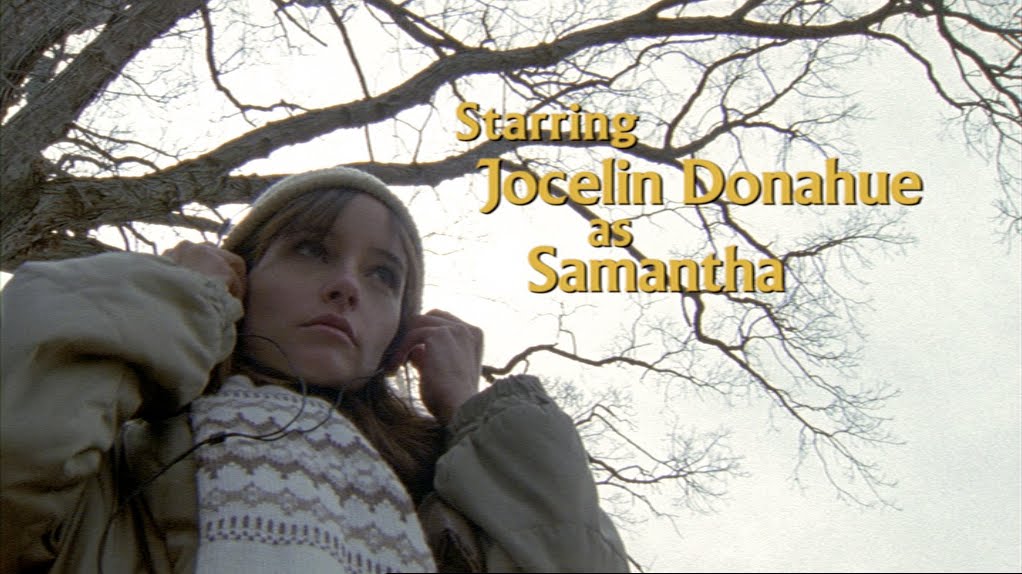
The film’s opening half hour, in which we bear witness the heavenly minutiae of our heroine Samantha (Jocelin Donahue)’s life as a small town college student in the 1980s, plays out like an extended love letter to all the oddly captivating prosaic detail that’s ever made your heart sing on an old horror tape. And when the actual horror itself finally gets going, we can sit back and let ourselves ricochet happily between slasher-era sartori (the takeaway pizza, the repurposed kitchen knife, the unsettling, jokey answerphone messages and all those endless phonecalls), late period ‘70s gothic (unnatural light through the stained glass windows, the harpsichord at the bottom of the stairs), hints of “Shuttered Room” style mad-relative-in-the-attic antics and Texas Chainsaw style deformed killer family mythos, Dennis Wheatley-approved old school Satanism, Phantasm-esque otherworldly graveyard shtick, all-purpose American haunted house tropes…. you name it, it’s probably in there somewhere.


Where West’s MO very much differs from Tarantino though is that “House Of The Devil” is a surprisingly subtle and slow-moving film – an approach that seems very brave given the fuck-yeah-gore approach favoured by most modern horror. In fact, it occurs to me that for a non-horror-fan viewer, unprepared to drink in the steady stream of referential, nostalgic reverie, “House Of The Devil” could easily become an unbearably dull experience – an exercise in deliberate mediocrity, lacking any entertainment-based pay-off.

As such, I can’t help but admire Ti West for taking a chance and placing the success of his film solely in the hands of those of us weird enough to react with joy at the sight of Samantha’s big, orange-padded walkman headphones, or at the beautiful climbing-the-stairs shots based on the bit where they find the mutilated body in ‘Night Of The Living Dead’. And given that he has apparently managed to make the film a roaring success on that basis, what can we say except HIGH FIVE, DUDE? What further proof could be needed that the Age of the Nerd is upon us?


The menacing kitsch of the house itself is wonderfully realised. These aren’t the kind of Satanists who live in rotting gothic splendour and leave a big ol’ grimoire conveniently open on the coffee table – rather their home evokes a horrid neo-classical banality that seeks to recall the stifling atmosphere of a million repressive parental homes. On second viewing, the empty, airless still-lifes that West frames within the house are by far the most chilling aspect of the film, recalling the way David Lynch filmed the interiors of the Palmer house in “Twin Peaks”, or the inexplicable dread of Pupi Avanti’s “House Of Laughing Windows” (a film whose influence seems to loom large over “House Of The Devil”).


Moreover, these eerie interiors represent the key point at which “House Of The Devil” really begins to transcend its status as a mere horror-movie-about-horror-movies, providing us with echoes of abuse and loneliness more subliminally menacing than any pasty-faced demonic crone. After all, you can punch one of those, but try punching an Edward Hopper painting. (Ok, obviously you COULD punch an Edward Hopper painting, but I’m talking figuratively here, let’s not go there.)


In fact, the only thing that ended up marring my enjoyment of the film was the inevitable satanic bloodbath that concludes proceedings – an odd thing for me to say, given that I generally welcome satanic bloodbaths as a fine addition to any motion picture. But, whilst there are a few wonderfully spine-tingling ‘evil reveal’ scares to be had in the closing twenty minutes of “House Of The Devil” (I’d tell you about ‘em, but I wouldn’t want to spoil ‘em), the full realisation of the film’s satanic shenanigans is rather hum-drum and predictable, somehow managing to feel infinitely less satisfying that the hour of sublime mudanity that proceeded it. I mean it’s some ok Satanism I guess, but it’s no "Devil Rides Out", y'know?

Actually, I probably would have enjoyed the film a lot more if the evil Satanists hadn’t revealed their existence AT ALL, and if Samantha had just gone to the house, hung around, noticed a few things that were *slightly* not-right, got a bit worried, and gone home. That would have been an amazing movie – a daring affront to the audience’s satanic bloodbath-based expectations, and a brilliant example of a horror movie whose horrors are created entirely in the imagination of the viewer; a new benchmark for restraint and the power of suggestion in the genre.

Sadly though, this isn’t that film, and when the time comes, the blood is spilled, the robes are donned, the knives are drawn, the doors are banged, the corridors are frenziedly run down, the teeth are bared, the colours are drained, and I start involuntarily humming The Ramones “You Should Never Have Opened That Door”.


Which is probably just as well I suppose. I mean, would anyone be rushing out to see this movie if the reviews had amounted to “ok, so nothing actually happens at all, but there’s some nifty interior décor and some great shot compositions, and the main theme music is totally killer”..?


This Ti West is a smart cat, I think. He knew what he had to deliver, and he got around to it within eighty minutes (PRAISE THE LORD, A MODERN MOVIE THAT ACTUALLY ENDS ON TIME), without resorting to any shitty ‘jump scares’ or ‘lightning strike’ cutting, and whilst still managing to turn in a film that often seems to function more as an extended video art project on aesthetic fetishisation than a narrative horror flick.

One thing that helps him to pull it off, I think, is sheer technical skill. Watching old VHS movies, and low budget cinema in general, we get used to certain things. Y’know what I mean - scenes will be inexplicably filmed in long shot, dialogue will not match on-screen action, bizarre music will deafen us at random intervals, people will talk about nothing in particular for minutes on end whilst the camera remains static, and so on. Some viewers learn to tolerate these deficiencies as natural wastage in between the cool bits, whilst some of us actively embrace them as perverse statements of otherworldly, homemade charm. But at the same time, would anyone want to watch a competent modern movie full of *deliberately contrived* long-shot addled padding..? Seems doubtful.


And so, like Tarantino before him, this is where West wisely breaks from mere re-enactment of the past, making sure that “House Of The Devil” is instantly recognisable as a good film, in the middlebrow newspaper critic / film studies teacher sense of the term. His directorial style is flawless, the film is perfectly paced, and flows beautifully. Every single shot is carefully and interestingly composed, full of rich incidental detail. The cinematography and production design is top notch. The acting is excellent, and all of the characters are lively, engaging and sympathetic (props in particular to Mary Woronov and Tom Noonan as our oddly loveable Satanist couple). The music is fantastic (opening credits theme = TUNE).

Even through sequences in which nothing whatsoever is happening, the film is a joy to behold. I could happily have watched Samantha and her best friend eating pizza and discussing the local property market for hours.


Subsequently, the film gains much of its power from the fact that the movie industry doesn’t usually let us see such specialist aesthetic fetishisation and vague, uneventful narratives in the context of a quote-unquote ‘good film’. “House Of The Devil” is a ‘good film’ that is utterly in thrall to the forbidden magic of ‘bad films’, and, as usual, the mainstream critics, copywriters and squares just won’t know what the hell to make of it, other than to acknowledge that it’s there, that people are watching it and enjoying it, and that it can’t be ignored forever.

A modest creative success on its own self-defined terms, “House Of The Devil” is far from the greatest film most cult movie buffs will have seen this week/month/year, but it DOES hopefully represent the stirring of a promising new approach to horror in the 21st century, and, speaking as a life-long fan of the weird, the obtuse and the cultish, it is always nice when one of ‘our guys’ manages to make a splash in the big pond, however fleetingly. Put me down as officially looking forward to whatever Ti West does next.


* Is that the best contrived sub-genre name ever, or what? Lovecraft fans will be delighted to learn there’s already a Brighton club-night called “Dreams In The Witch House”.

**As with all “the first [whatever] EVER!” type proclamations, this claim is of course utterly fatuous, and readers are encouraged to write in and tell me why “Abbott and Costello Meet The Wolfman” or “House of Frankenstein” or something was actually the first ever post-modern horror movie.

Friday, 9 July 2010

Savage Night
by Jim Thompson

(Corgi, 1988; originally published 1953)


Well I’m not posting this one for the cover, that’s for sure.

In fact, the more I look at this cover illustration, the uglier and stupider it gets – an unhappy reminder of the dark days of the ‘80s when publishers weren’t sure whether to wrap up classic crime books in old-fashioned pulp style, or go for the more upmarket ‘classic books’/noir heritage look that’s predominated in the past few decades, instead going for a thoroughly unsatisfying halfway house approach.

I seem to remember bland, cardboard cut-out characters like these inhabiting the covers of a lot of the books I used to get out of the library as a kid during the '80s. Who the hell are they anyway? They certainly don’t resemble anyone you’ll find in Thompson’s book. The two main female characters in “Savage Night” are the scheming, ex-nightclub singer wife of an alcoholic mob stool pigeon, and an emotionally-scarred maid-servant with a deformed leg. Did the illustrator even bother reading a plot synopsis? At least when cover artists used to make shit up back in the old days, they’d usually make up cool shit. What a drag.

Oh well, I guess all the pill-poppin’ maniacs and long-gone daddies in the illustration game had moved on to churning out eye-boggling VHS covers by the time this edition came out, so we can still enjoy looking at those.

Anyway, I’ve been enjoying (if that’s the right word) a few Jim Thompson books recently. Quotes on the back tend to say things like “read Thompson and take a tour of hell” (The New Republic), and to be honest it’s hard to convey the sheer, unremitting bleakness of his work without resorting to similar hyperbole. Seriously, Nelson Algren and Raymond Chandler were happy-go-lucky funsters compared to this cat.

Or at least, however dark things get in Chandler, we see events through Philip Marlowe’s withering eye – a man of reason, ready to reluctantly clean up the mess, quietly asserting his moral authority in the process. We get no such reassurance from Thompson, who prefers to plunge us straight into the minds of the most lowly and doomed operators he can conjure, all struggling like rats in a trap.

Thompson’s characters are uniformly cruel, brutalised, self-centred, confused and misguided, capable of slitting each other’s throats on the flimsiest pretext. But they’re not villains, or freaks, or drop-outs or psychopaths… at least, not on the surface. They’re guys who might work next to you in dead end jobs, or that you might meet at the bus station, or see killing time at the library. Their world is devoid of the romanticism usually implied by gangster and noir shtick. They all had rough upbringings, they all work hard and do their best, and where does it get them? Fucked, that’s where.

The protagonists of probably Thompson’s best known book “The Grifters” are so screwed up, they never even manage to get a proper crime narrative rolling before they meet their inevitable demise. The characters, the situations, the language, are all those of a crime novel, but when you reach the end you realise you’ve been suckered into reading a study of brutish, existential despair rather than the heist/double-cross yarn you may have been expecting. And somehow we can’t help but want to read more.

I know I’m making it all sound pretty comedically grim, and it is, but the depth Thompson manages to invest in these characters in the space of a 120 page “American groin kick novel” (thanks to Vanity Fair for that one) makes his work absolutely devastating. Really one of the great mid 20th century writers, irrespective of genre, and I look forward to dipping into more of his tales whenever my approach to human nature starts to get a bit too rosy.

I didn’t mean to write quite that much here, because actually this post was supposed to be the first in an occasional thread where I’d post brief illuminating and/or amusing extracts from books I’ve read recently, and keep the commentary to a minimum. Oh well, maybe next time.

Anyway, I thought you all might this rare moment of brevity from “Savage Night”, wherein our "hero" Carl Bigelow lays unable to sleep next to an obnoxious, snoring dame, and thinks back to the time he once hitched a ride with an eccentric pulp novelist…

------

He was a writer, only he didn’t call himself that. He called himself a hockey peddler. ‘You notice that smell?’ he said, ‘I just got through dumping a load of crap in New York, and I ain’t had time to get fumigated.’ All I could smell was the whiz he’d been drinking. He went on talking, not at all grammatical like you might expect a writer to, and he was funny as hell.

He said he had a farm up in Vermont, and all he grew on it was the more interesting portions of the female anatomy. And he never laughed or cracked a smile, and the way he talked about it he almost made you believe it. ‘I fertilize them with wild goat manure’, he said. ‘The goats are tame to begin with, but they soon go wild. The stench, you know. I feed them on the finest grade grain alcohol, and they have their own private cesspool to bathe in. But nothing does any good. You should see them at night, when they stand on their heads, howling.’

I grinned, wondering why I didn’t give it to him. ‘I didn’t know goats howled,’ I said.
‘They do if they’re wild enough,’ he said.
‘Is that all you grow?’ I said. ‘You don’t have bodies on any of – of those things?’

‘Jesus Christ!’, he turned to me like I’d called him a dirty name. ‘Ain’t I got things tough enough as it is? Even butts and breasts are becoming a drag on the market. About all there’s any demand for anymore is you know what.’ He passed me the bottle, and had a drink himself, and he calmed down a little. ‘Oh, I used to grow other things,’ he said. ‘Bodies. Faces. Eyes. Expressions. Brains. I grew them in a three-dollar-a-week room down on Fourteenth street and I ate aspirin when I couldn’t raise the dough for a hamburger. And every now and then some lordly book publisher would come down and reap my crop and sell it at two fifty a copy, and lo and behold, if I praised him mightily and never suggested that he was a member of the Jukes family in disguise, he would spend three or four dollars on advertising and the sales of the book would swell to a total of nine hundred copies and he would give me ten percent of the proceeds… when he got around to it.’ He spat out the window and took another drink. ‘How about driving a while?’

I slid over him, over behind the wheel, and his hands slid over me. ‘Let’s see the shiv,’ he said.
‘The what?’
‘The pig sticker, the switchblade, the knife, for Christ’s sake. Don’t you understand English? You ain’t a publisher are you?’

------------

I suspect our agrarian friend might have felt more comfortable within the covers of this older edition of “Savage Night”;


More classic Thompson cover art can be found here. Most of the Lion covers are pretty cheesy, but the Signet editions of “The Getaway” and “Wild Town” are both incredible pieces of work, and make the above ‘80s cover look even more stupefyingly tepid in comparison.

Thursday, 1 July 2010

VHS Purgatory:
The Edge of Terror
(Nico Mastorakis, 1986)


PRICE PAID: A record breaking 30p from the basement of Greenwich Music & Video Exchange.

THE BOX SAYS:
“It comes at night. It’s a merciless, vicious killer. It can be your enemy or it can be your friend.”

Huh? It can do what now? What’s ‘It’ anyway? Where am I? As usual, sounds like an intern was just slinging this shit together using some magnetic poetry kit of video box copy clichés.

THE FILM DELIVERS:

The Greek director Nico Mastorakis seems to have operated as something of a one-man film production powerhouse from the ‘70s through to the ‘90s, knocking out a steady stream of independently-financed exploitation flicks ranging from the notorious sickie “Island of Death” in ’75 through to brainless fare like “The Zero Boys” and “Ninja Academy” in the late ‘80s. Given that his mighty efforts seem to have been rewarded with an almost total lack of commercial success, critical recognition or cult following that persists to this day, I can only assume Mr. Mastorakis was one determined dude. Apparently his last film as writer/director/producer was something called “.com for Murder” in 2002, which… sounds like as good a place as any for him to admit defeat and move into property management or whatever the hell he does now.

Approaching a 15-rated ‘atmospheric suspense thriller’ lensed by a guy best known (in so far as he’s known at all) for sex/violence shock tactics and utter trash (this VHS dates from the bad old days when the BBFC used to slap an ‘18’ on anything that even LOOKED like it might be a horror movie), the only edge I was expecting “Edge of Terror” to take me to was the queasy precipice between boredom and ridicule, but you know what? I’m going to drop the sneery tone right there, because “Edge of Terror” is actually pretty good.

I mean, it’s certainly not a GREAT film by any means, probably not one I’d encourage you go out of your way to track down unless you have some particular interest in it, but if you happen to find a cheap copy knocking around somewhere, go for it - you could do a lot worse. Essentially Mastorakis’ attempt at a legitimate murder/suspense film in the ‘Cape Fear’-via-Hitchcock mould, “Edge of Terror” is a well made, thoroughly watchable and not-entirely-stupid piece of work that didn’t have me checking my watch once through its 100 minute run time.

Aside from anything else, it certainly gets a thumbs up for the economy of its plotting. American thriller writer Sean, played by Meg Foster (she of the weird, iridescent eyes and fiery red hair), has rented a remote house in a near deserted Greek village in order to get some peace and quiet to finish off her new book. Unfortunately though, her landlord (an eccentric old duffer played with relish by veteran character actor Robert Morley) is promptly murdered by psychotic handyman Phil (Wings Hauser, he of the post-Jack Nicholson fevered grin, lurching nervous mannerisms and personal grooming that befits a guy named Wings Hauser). As the only witness to said crime, Sean is naturally in the hot seat for the next round of slaying, and the rest of the film essentially consists of a life and death struggle as she and Phil stalk each other around their isolated clifftop locale.

Refreshingly for a movie that could easily have degenerated into a dreary slasher, the focus stays firmly on the fight between the two characters, and they’re a lot more evenly matched than the legacy of a thousand faintly misogynistic Euro stalk n’ slash movies would lead one to expect. Meg turns out to be convincingly bad-ass heroine, keeping a cool head when pursued by a murderous loon with a sickle, going into full-on “resourceful” mode and ditching her high fashion duds in favour of a more practical boilersuit… y’know, just like a sensible, real-life woman probably would. And Wings, for his part, portrays a fairly goofy, amateur psychopath, staggering about in a confused rage and looking pretty taken aback by the fact he’s got an actual opponent to deal with rather than a screaming bimbo to terrorise. So: smart woman with a butcher’s knife vs. staggering weirdo man with a sickle? You’ve gotta like those odds.

In what I assume to be an unusual move for a low budget ‘80s movie, “Edge of Terror” is filmed in old fashioned Technicolor, and Director of Photography Andreas Bellis deserves credit for some splendid and imaginative cinematography – even on this battered, 20+ year old tape, the movie looks superb. In fact, aside from the odd detail of fashion or dialogue, the opening sequences here could easily be mistaken for one of those lavish Italian movies from the ‘70s where a load of fashionable ladies flounce around some luxurious coastal resort getting up to no good and murdering each other and what-not. At times “Edge of Terror” put me in mind of Bava’s “Bay of Blood”/“Twitch of the Death Nerve”, if admittedly with a smaller cast and minus the gratuitous carnage.

Mastorakis’s direction is sometimes a little artless, and subject to rather overcooked ‘stylistic flourishes’ (slow motion, Ridley Scott style back-lighting etc), but in general it’s pretty solid, squeezing a great deal of atmosphere out of the Greek locations, whilst his tight editing keeps things moving along at a cracking pace. The closing daybreak/final struggle sequence is particularly noteworthy, bringing an unexpected dose of disorientating otherworldliness to the film’s conclusion, recalling the eerie intensity of classic low budget ‘70s Euro-horrors like DeOssario’s “Tombs of the Blind Dead” or Rollin’s “Grapes of Death”.

The script (also by Mastorakis) lets the side down slightly, with some clunking mouthfuls of unlikely dialogue, which… ok, actually I always enjoy those, but more crucially, some poor writing later in the film that come dangerously close to ruining the good feeling the rest of the movie has built up. As noted, both Foster and Hauser work hard to establish their respective characters on a level that goes beyond mere assemblages of cliché, but increasingly in the final half hour the script begins to undermine their efforts, as Meg’s previously down to earth character suddenly starts doing incredibly stupid things, and Hauser’s shambling nutter seems to find himself imbued with Michael Myers-like supernatural cunning.

Case in point is the sequence in which Sean suddenly remembers that the landlord told her his son’s hunting gear was kept in a locked cupboard in the house; kicking it open, she suddenly finds herself with a high-powered hunting rifle! Aha! A real game-changer in a struggle-for-survival movie like this, needless to say. Emptying a box of ammo, she declares that there are 4 LIVE ROUNDS left, and we see a close up of her loading them one by one.

Now a scene like this, and a specific piece of information like that, creates certain expectations for an attentive audience – namely, that the use of those four rounds is going to prove pretty pivotal to the narrative, and is going to be drawn out for maximum tension and excitement. Not so here though, as Sean simply kicks open the upstairs window and starts randomly blasting away at the general area where Wings is patrolling around looking for her, shrugging when the ammo runs out and going back to her knife. I mean, why the hell was that scene even in the movie? Pure amateur hour stuff whichever way you look at it, and very much detrimental to the enjoyment of the film’s ‘one-on-one battle of wits’ aspect, needless to say.

And that’s a good summation of “Edge of Terror”s shortcomings really. Whilst Masterakis succeeds admirably in his presumed goal of making a good, comparatively serious film without falling back on tits and gore, his occasional lapses into silliness render it not quite good enough to have really grabbed anyone’s attention on release (especially when Robert Harmon’s similarly-plotted “The Hitcher” was kicking twenty kinds of ass in cinemas the same year). And whilst it is objectively speaking probably a better film than a lot of the oddities unearthed by DVD labels like Code:Red and Shameless, the lack of any big names or Unique Selling Point, the dull-sounding plot-line and the absence of aforementioned tits and gore - above all, the lack of any honest to god WEIRDNESS – all this sadly points toward the film’s continued obscurity in the eyes of modern day cult film fans.

Ah well. You gave it your best shot Nico, and no one can take that away from you. You made a pretty good movie, and that’s more than most of us can say.

BEST DIALOGUE:

“Your problem Sean is, you think I’m one of those super-studs from your novels, but I’m not. I’m a real, forty-two year old, overweight guy, and once in a night is enough after a hard day in the mine.”

David McCallum, playing Sean’s boyfriend in the film’s LA prologue, manages to deliver this speech with such sincerity, I immediately started thinking “boy, he’s got a pretty swanky pad for a miner”. Then before I could finish that thought, they opened the skylight and saw the Goodyear blimp! The actual Goodyear blimp! I loved that whole sequence, actually.