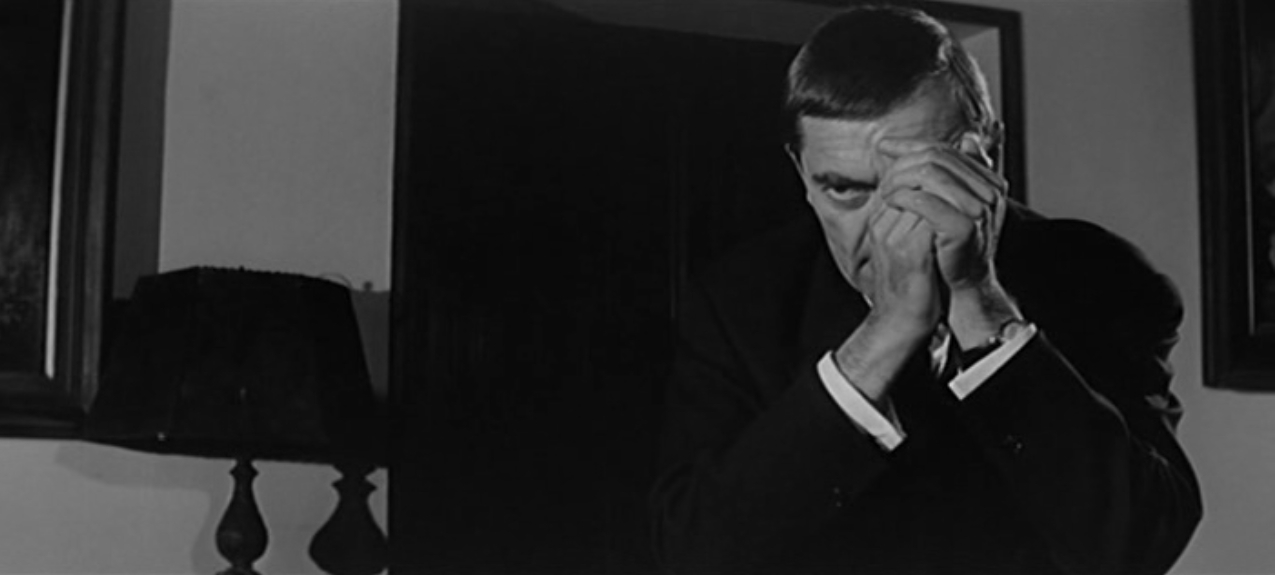
Showing posts with label Howard Vernon. Show all posts

Monday, 7 October 2019

Franco Files / October Horrors 2019 # 4:
Dracula’s Daughter
(Jess Franco, 1972)


The early 1970s found Jess Franco’s restless creative spirit riding high in terms of both profligacy and artistry, hitting a peak of productivity that he would never again match (although the purple patch which followed his return to Spain in the early 1980s came pretty close).

According to the information compiled by Stephen Thrower for his exhaustive Franco filmography [see the link to his book below], no less than ten Jess Franco films were completed or released during 1971, with eight more to follow in 1972, including some of the director’s best (and strangest) work – ‘A Virgin Among The Living Dead’ (at this point still bearing it’s intended title, ‘La Nuit de L’etoiles Filantes’), ‘The Erotic Rites of Frankenstein’, Les Demons and ‘Le Journal Intime d’une Nymphomane’, alongside a steady stream of more forgettable quote-unquote “mainstream” pictures like ‘The Vengeance of Dr Mabuse’, ‘Un Silencio De Tumba’ and ‘Devil’s Island Lovers’. Suffice to say, the images which unfolded before our hero’s retina across these few short years would have been enough to send lesser men screaming to the asylum (hopefully that one from Lorna the Exorcist in which nobody wears any pants).

Amidst this frantic whirlwind of cash-strapped cinematic alchemy, it’s unsurprising that a relatively low key venture like the generically titled ‘Dracula’s Daughter’ - shot right in the centre of this exhausting period, in the early months of ’72 - could easily be over-looked. Generally regarded by Francophiles as a slight entry in the great man’s explosive early ‘70s catalogue, this one has often been seen either as a scrappy after-thought to the far wilder pair of monster-based horror movies the director shot a few months earlier (the aforementioned ‘Erotic Rites..’ and Dracula: Prisoner of Frankenstein), or else as a poor relation to his more striking and sublime vampire-sex epics, the earlier Vampiros Lesbos and the later ‘Le Comtesse Noire’ / ‘Female Vampire’.

A dismissive review in Thrower’s definitive Murderous Passions: The Delirious Cinema of Jesús Franco a few years ago would seem to have sealed ‘Dracula’s Daughter’s fate as an also-ran, but, returning to it recently after a period in which I’ve largely been forced to go cold turkey on my Franco habit, I actually enjoyed it a great deal.

Viewed in quick succession with the lunatic works which surround it in the director’s catalogue, I can understand that ‘Dracula’s Daughter’ might fade into the background, but hitting it up cold still gave me a pretty dizzying high – like a drink from a crystal clear oasis amid the arid desert of films not made by everybody’s favourite perverted Iberian hobbit.

As Thrower’s review discusses at length, the quote-unquote ‘plot’ here is indeed a back-of-a-badly-shredded-napkin bunch of nonsense, leaving character relationships and emotions / motivations flimsy and mutable in the extreme, and reducing the inevitable, exposition-clogged ‘police investigation’ segments to a meaningless bore, with Franco once again re-heating the same tepid leftovers from The Awful Dr Orlof that he’d return to endlessly in his horror projects over the years, for some godforsaken reason. But, such was my happiness at returning to the Francoverse on this occasion, I welcomed even these scenes, whilst elsewhere, more ambient pleasures of Franco’s filmmaking were all present and correct.

Though they understandably tend to get over-shadowed by Soledad and Lina in fans’ affections, Britt Nichols (with an earthy, shop-soiled Jane Fonda kind of look) and Anne Libert (fresh off her equally dazed, acid-witch turn as Melissa the bird-woman in ‘Erotic Rites..’) are both exceptional Franco women, as oddly mysterious as they are self-evidently beautiful, and it’s great to see them both stepping up and doing their thing here, as a pair of dreamy-eyed cousins / lovers falling victim to the vampiric pull of the Karnstein mansion.

And as to the nature of that ‘thing’ they’re doing meanwhile, well, I won’t need to remind readers that Franco was a filmmaker who approached lesbian sex scenes with the same enthusiasm more conventional directors might reserve for a car chase or bank heist, and Nichols & Libert’s big number at the mid-point of ‘Dracula’s Daughter’ is a bravura sequence indeed, in spite of some rather plain photography.

Franco’s characteristic abstraction of the female body into fleshy fields of hill and valley is intercut here with footage of the director’s long-term friend and collaborator Daniel White playing the piano (the same one we see Howard Vernon tickling away on in ‘A Virgin Among The Living Dead’, I believe) with dramatic gusto, beneath glimmering crystal chandeliers. The composer’s lithe, drowsy explorations of suffocatingly romantic melodicism cast their spell as powerfully here as at any point in Franco’s cinema, helping transform this sequence into a pure, uncut dose of the director’s intoxicating artistry.

A later tryst between the two women, in which Nichols’ breasts rise in the foreground like mountains as Libert’s face writhes out of focus behind them and an incongruous ‘suspense’ cue plays on the soundtrack, is also remarkable for its sheer strangeness.

(White, incidentally, plays the role of the geriatric Count Karnstein in the film, and if you’re expecting an explanation of why a refugee from Sheridan LeFanu’s writing lives in Portugal and keeps Count Dracula in his basement, well… you’re watching to wrong movie here, frankly.)

‘Dracula’s Daughter’, like many films of this period, was filmed around the towns of Cascais and Sintra near Lisbon, in and around the same set of extraordinary buildings that lent their unique atmos to ‘A Virgin…’, ‘Erotic Rites..’ and ‘Les Demons’ amongst others, and they looking as startlingly otherworldy here as ever, particularly when Nichols and Libert take some long walks amid the tropical greenery.

Highlights elsewhere meanwhile include the way that the film pretty much opens with waves crashing upon some deserted beach, cutting to a crash zoom into an extreme close up of a female eyeball, followed by some trademark Franco in-camera weirdness as a woman stripping off for a bath in her hotel room fights to remain on-screen as reflections of the churning coastline, caught in some kind of balcony window that Jess appears to be shooting through, swamp the frame, to the accompaniment of a lugubrious dinner jazz cue. (She’ll soon be murdered by a roaming vamp we presume must be Count Dracula though, so no worries.)

Later on, I also enjoyed a staggeringly beautiful shot in which Libert strolls out across an ancient-looking stone balcony, observing the foggy coastal hills below; nothing special really, but something about the leisurely pace, the blinding sun shining across the water and Libert’s uncanny presence just struck me as a great little bit of Franco magic. (MENTAL NOTE: must book part # 2 of The Great Jess Franco Location Tour ASAP.)

Elsewhere, I also loved the Franco’s own role in ‘Dracula’s Daughter’, essaying the role of one “Cyril Jefferson”, Count Karnstein’s ‘secretary’ - a lank-haired, spaced out occult oddball who (in a distant nod perhaps to the plotting of Hammer’s 1958 ‘Dracula’) we eventually learn has taken the Karnstein job specifically in order to destroy the vampire menace. Prior to that however, he is happy just to infuriate Alberto Dalbe’s dour police inspector by turning up at random intervals to deliver unfathomable metaphysical pronouncements (“In the night the silence of death will surround us, interrupted from time to time by screams of horror; that’s the eternal law of mystery and terror”). Definitely one of the director’s best acting performances in a non-idiot role, and he even gets to wear a top hat in a few scenes, which is awesome.

Combined with the humid, wave-crashing atmospherics of Franco’s familiar coastal interzone, and the ceaseless chirping of sea-birds on the soundtrack, Cyril’s rolling stream of fervent blather (he even pontificates at one point about “the blood-drinking birds of death”, or somesuch) does a wonderful job of torpedoing Dalbe’s doomed attempt to hang on to some torn thread of rationality. He may persist with pottering about looking for alibis and forensic evidence, but we in the audience know it’s a lost cause – like us, he’s beyond Franco’s looking glass here, neck-deep in the primordial stew of this familiar holiday villa dreamworld.

On the horror side of things meanwhile, Howard Vernon may not have much to do as Dracula, but it’s still nice to see the old boy enjoying himself, in footage presumably shot simultaneously with ‘Dracula: Prisoner of Frankenstein’. He certainly has the same full-on boggling eyes / open-mouthed fangy grin thing going on here as he arises from his coffin in some dank basement, although Franco’s character seems to have stolen his top hat from the earlier film. (You could possibly argue that the use of wide angle(?) framing for these basement shots pays tribute to Karl Freund’s uncanny crypt tracking shots in Browning’s ‘Dracula’, but… it would be a push.)

Although The Count never gets a chance to get out and about in this one, he does at least get to roll around in his coffin with a kidnapped nightclub stripper whilst Nichols, as his ‘daughter’, nails down the lid - which was presumably a lot more fun than Christopher Lee was allowed in all those ‘Dracula’ sequels where Hammer insisted he spend his time skulking about in darkened basements.

In another example of Franco’s perplexing tendency to obsessively recreate the bad as well as good elements of his earlier films however, the lacklustre finale of ‘Dracula’s Daughter’ seems to echo that of his disastrous 1970 ‘Count Dracula’. Nonetheless, for what it’s worth, I’m pretty sure this is the first and only time I’ve ever seen Dracula dispatched by getting a stake between his eyes, and to be honest, if you’re still awake and sober enough to object by that point in proceedings, that’s your problem.

For some, ‘Dracula’s Daughter’ will seem like a gossamer thin veil of Franco mystique spread far too thin, betraying the exhaustion that his relentless early ‘70s schedule had led him to, and marking the point at which the thread of his “shoot first, ask questions later” approach (assembling new films out of footage stolen during shoots for other projects, essentially) finally snapped. For me here in 2019 though, it still served as a welcome reminder of the reasons why we (or at least, I ) have dedicated so much time and effort to following the star-dust trail of this man’s sensuous, mind-altering, defiantly irrational approach to filmmaking. (And, a few glasses of red wine probably helped too, TBH.)

As per Franco Files tradition, I’m obliged to conclude with a scorecard, and, after careful consideration, it looks as if ‘Dracula’s Daughter’ gets a straight run down the middle:

Kink: 3/5
Creepitude: 3/5
Pulp Thrills: 3/5
Altered States: 3/5
Sight Seeing: 3/5

A creditable score.

Saturday, 2 April 2016

Franco Files:
The Sadistic Baron Von Klaus
(1962)


OBLIGATORY VIEWING NOTE: Screengrabs are by necessity taken from the old DVD rather than shiny new Blu-Ray, etc etc.

AKA:
La Mano de un Hombre Muerto (Spain), Sinfonia per un Sadico (Italy), La Bestia del Castello Maldetto (Italy), Hysterical Sadique (France).

The same year that he introduced us to The Awful Dr. Orlof, the young Jess Franco also brought another, somewhat lesser known, pejorative-prefixed evil-doer to Europe’s shadier movie screens, in the shape of The Sadistic Baron Von Klaus.

Watching this French/Spanish co-production, the reason for the Baron’s failure to achieve the same enduring popularity enjoyed by the good doctor soon becomes abundantly clear. Whilst ‘The Sadistic Baron Von Klaus’ is certainly notable for establishing several important ‘firsts’ within Franco’s cinematic universe (we will go on to discuss these below), it also serves as the first fully-formed example of a frustrating tendency that the director would go on to pursue throughout his career – namely, that of weaving a small handful of potent ideas and images into the fabric of a movie that is otherwise so excruciatingly boring it would challenge the eyelids of even the most dedicated Euro-cult aficionado.

That said, the film’s opening scenes at least betray little sign of the doldrums that await. In fact, they are remarkably cheery for what is ostensibly a gothic horror film, reflecting the breezy bonhomie of the same year’s La Muerte Silba un Blues, as a busy Alpine inn erupts with music, jollity and female pulchritude.

Here, a bearded vagrant blatantly defies conventional ‘show not tell’ wisdom as he gives us a lively run down of the movie’s back story – a familiar tale of the maleficent ancestor of a local aristocrat possessing the bodies of his descendants and periodically sending them out to commit sadistic (yep) outrages against the town’s womenfolk.

“It’s a tale for children, but certainly compelling”, comments a visiting doctor listening in on the conversation, thus inadvertently encapsulating the entire history of European horror filmmaking in a single sentence.

Next, we switch to, uh.. a city? .. where the editor of the indispensable sounding ‘Maidens and Murderers’ magazine has a new assignment for his chief reporter (because yes, in Jess Franco-world, publications with names like ‘Maidens and Murderers’ actually have reporters on their staff who are sent out to chase up stories). Thus, Karl Steiner (Fernando Delgado) – a lecherous, smirking bon vivant who is essentially interchangeable with the male protagonists in most of Franco’s black & white era films - is commanded to jump in his snazzy sports-car and pay a visit to the remote mountain town of Holfen (“..noted for its gothic mood, its trout and its crimes”), to find out what gives.

In true Franco fashion, both plotting and pacing here are extremely lackadaisical, lending TSBVK (if you will) a bit of an ‘off beat’ flavour that immediately sets it apart from its more somber British and Italian gothic contemporaries. The downside of this approach however is that the film soon becomes dominated by a hell of a lot of extraneous yakking, which, though initially rendered in a lively enough fashion to make it fairly entertaining if you’re in the mood, swiftly deteriorates into a hideous, numbing drag as the gears of the plodding police procedural/whodunit stuff begin to grind slowly through their over-familiar motions, meaning that by the time we’re halfway through the eye-watering 110 minute run-time of the full, uncut version, we’ve hit a slump from which the movie never quite manages to recover, despite some intermittent points of interest.

What thrills there are here are largely of the “dark, behatted stranger stalking pretty ladies” variety, with some looming, knife-wielding silhouettes and suchlike that will inevitably have modern viewers yelling “GIALLO!”, even as more contemporary audiences would more likely have associated such imagery with the krimi cycle that was all the rage in the West German film industry at the time. (Joining the dots here, it’s always worth remembering that Mario Bava’s pivotal ‘Blood & Black Lace’ (1964) was initially intended as a cash-in on the krimi trend.)

Actually, in many ways, TSBVK spends far more time being krimi-like than it does being gothic horror-like, despite a storyline and atmosphere that initially recalls the latter genre, with its unnecessarily large cast of suspicious, oddball characters, it’s decidedly realistic and non-supernatural crimes and it’s concentration upon investigative detail all echoing Rialto’s Wallace films. Perhaps we could interpret this as Franco cannily hedging his bets between two formulas currently saleable in different markets, or perhaps just an example of his tendency to throw together a pile of random genre elements and just ramble with them where he pleased - either way, the result is the same.

One of the best things about this film is the unusually lavish scope shooting ratio, which allows Franco to utilise some beautiful faux-Alpine landscapes for establishing shots, atmospheric cut-ins and the like. Although TSBVK was not actually shot in the Alps, Franco and his collaborators took the wise decision to relocate to a small town in the Spanish Pyrenees, which stands in for the picturesque Germanic setting quite well, meaning that no matte paintings or process shots are needed here. (Who knows, perhaps they even used real snow?)

This emphasis on location shooting also allows us to enjoy numerous examples of the young Jess honing the talent for making inspired use ‘real world’ locations that would of course help to define the style of most of his subsequent filmmaking. Most notable in this regard is one particularly impressive sequence that details the killer’s pursuit of the heroine through the shadowed town streets, incorporating a number of excellent, and presumably entirely off-the-cuff, bits of noir-ish style, culminating in an audacious high angle shot across a wide, deserted square that almost seems to join the dots between ‘The Third Man’ and Argento’s use of similar spaces in ‘Suspiria’ and ‘Deep Red’.

In fact, like many of Franco’s black & white films, TSBVK contains number of elaborately composed – almost gratuitously ‘stylish’ - pictorial shots that could well represent examples of the director cheerily taking the opportunity to recreate memorable moments from other movies. Whilst I’m too much of a lazy and half-arsed cinephile to get a positive ID on any of them myself, it is easy to believe that a viewer with a more encyclopedic knowledge of classic film could sit through this one dutifully ticking off nods to Welles, Lang, Bresson and so on.

Another plus for any Jess Franco film of course is the presence of Howard Vernon, and although the role of the titular Baron doesn’t give him a great deal to sink his teeth into (he’s basically the equivalent of one of the ‘obvious red herring’ characters essayed by Klaus Kinski in so many krimis), he’s nonetheless on top form, turning in a creepy-goofy performance that seems very much like a warm up for his “Uncle Howard” persona in ‘A Virgin Among The Living Dead’ a decade later.

Meanwhile, his nephew, Ludwig Von Klaus (Hugo Blanco) is a fresh-faced, serious-minded young fellow who looks as if he might otherwise be found playing bass in a moody post-punk band. Dressed from head to toe in black leather when he is initially introduced, he looks, well, kind of like a SADIST might look, perhaps..?

Ludwig may not have been responsible for the murders that took place before his arrival in town (who WAS responsible is a question that, in true Franco style, the movie never really bothers to address), but by the time Von Klaus Jnr is gazing in awe at the splendidly-appointed subterranean torture chamber that his mother entrusted him with the key to upon her death bed, any aspirations TSBVK might have had toward being a krimi-style whodunit are totally out of the window.

Though this early revelation may render the subsequent outbreaks of plodding investigative detail even more redundant than they might otherwise have been, worry not, for it is with the depredations of the younger Von Klaus that we finally get to the stuff that makes this film worthy of continued attention from Franco enthusiasts.

Aside from the film’s English language export title, the first giveaway vis-à-vis the director’s real intentions with this story comes via the extract Von Klaus reads from the diary of his much-maligned sorcerer/murderer ancestor. Herein, we learn of such things as “..the tragic eroticism of the senses, finally ending in death”, making it clear that, whilst the old Marquis is never mentioned by name, ‘The Sadistic Baron Von Klaus’ nonetheless represents the first of the many, many films Jess Franco would make inspired by the works of De Sade.

Whilst our Baron’s Sadean frolics are necessarily discussed and portrayed far less openly than they would be in Franco’s later films on the subject, TSBVK nonetheless goes some way toward demonstrating that, even in 1962, the director was determined to push the envelope re: acceptable sexual content in his films.

The references in the French language dialogue track to sexual assault as the police examine the bodies of the murderer’s earlier victims are certainly somewhat stronger than anything one would encounter in an English language film of this vintage, and Franco’s perennial obsession with the familial/incestuous aspects of DeSade’s work can be seen here too in the movie’s twist on the standard issue gothic horror “cursed family line” shtick, but really, this all pales in comparison to the central set-piece scene in which we finally get to see the young Baron having his wicked way with one of his victims – a sequence so extraordinarily daring that it seems to belong to a different film – and a different era – altogether.

The victim on this occasion is Margaret, the sultry bar-maid (played by the excellently named Gogó Rojo) whom hetero-male viewers will likely have had half an eye on since the movie began, and, rather than a random abduction, she had actually been involved in a consensual affair with the young Baron. Shortly before he shoves the ol’ chloroform-soaked rag into her face during a passionate make-out session in his car in fact, he tells her, apparently in earnest, that he “loves her to death”, and the suggestion that his crimes may be interpreted semi-sympathetically as ‘acts of love’ – as opposed to the mustache-twirling villainy more commonly portrayed in horror films of this vintage – helps make the scene that follows all the more transgressive.

The Baron’s stripping of Margaret’s semi-conscious form in his subterranean lair is immediately shocking in its voyeuristic directness – I don’t think I’ve ever encountered a film from this era that showed this much skin, let alone in such a grim context – and, as her body is slowly exposed and fondled by Ludwig’s hands, the vibe of kinky, aesthetically-inclined perversity is impossible to miss.

As things start to heat up, Daniel White – whose music is excellent throughout the film, I should note - lets rip with a nerve-jangling avant garde chorale that recalls the kind of thing Morricone knocked up for the giallos a decade later. Meanwhile, the camera executes an audacious vertical pan across a rotting drape curtain to a ceiling mirror in which the lurid action below reflected in full detail, shadows of dark cloth on the bed standing out almost like the eye-holes of a skull as the two bodies writhe upon them… by which point we’re really cooking with gas.

This is Jess Franco’s erotic / cinematic imagination suddenly emerging into full bloom, like some long-repressed fantasy exploding onto the screen as a burst of decadent Sadean freakery that goes way beyond anything contemporary viewers would have expected from a gothic-ish horror movie, even if Franco does at least bow to contemporary standards of decorum by cutting away when the Baron pulls a heated knife from a brazier with which to mutilate the chained girl - even whilst the ensuing shots of her writhing legs remain far more disturbing than some poorly executed gore effect would ever have been.

Strangely, this entire sequence seems to have been shot without direct sound, and, aside from White’s jolting music, it plays out entirely in silence. Add a few juddering, unnatural camera movements and hazy, soft focus photography, and, whether by accident or design, we’re left with the unsettling impression that we could easily be watching some lost fragment of twisted, silent-era pornography.

Starkly cruel, surprisingly explicit and – it must be said – shamelessly misogynistic, this scene is undoubtedly the biggest sado-erotic showstopper in Franco’s entire pre-Necronomicon filmography, a startling fever dream that seems to have emerged from an entirely different world from the comparatively dreary material that surrounds it, and a direct precursor to the sensually over-powering sex/murder sequences of Venus In Furs.

As you might imagine, all of this proved a bit much for the film’s distributors, and initial theatrical releases in both France and Spain saw this whole sequence replaced with a milder, ‘clothed’ version that Franco apparently filmed simultaneously, in an early example of a practice that later become ubiquitous in Spanish horror. The fact that losing the ‘meat’ of the full strength version would render the film an almost total waste of time for its audience was presumably not lost on potential American distributors, who consequently took a pass on it, meaning that, unlike the majority of Franco’s other early horror films, TSBVK didn’t reach English-speaking shores until the DVD era.

Dutifully restored to its full glory via the French re-release print used for the recent Kino/Redemption Blu-Ray, this brief sequence of erotic delirium makes ‘The Sadistic Baron Von Klaus’ a minor revelation for Francophiles, but, even in its unexpurgated form, the film as a whole is unlikely to win over more casual (or indeed, more critical) viewers. Following that one astonishing diversion in fact, the sad truth is that the tedium only increases during the closing twenty minutes, leading ultimately to an attractively shot but crushingly bland finale that ends proceedings on a profound shrug of indifference.

For all of ‘The Sadistic Baron Von Klaus’s kinky transgressions and impressive filmmaking chops, the dictates of conventional plotting and genre expectations hold it back as effectively as a sadist’s chains, consigning at least 75% of its excruciatingly over-extended run-time to a pit of fusty administrative pointlessness. As such, it can’t really be counted amongst Jess Franco’s better black & white pictures, even whilst it houses one solitary sequence that kicks up more sparks than any of them.

------------------------

Kink: 3/5
Creepitude: 2/5
Pulp Thrills: 2/5
Altered States: 2/5
Sight Seeing: 3/5

-------------------------

All else aside, readers are invited to observe that this movie had some *splendid* posters;


Wednesday, 26 August 2015

Franco Files:
She Killed in Ecstasy
(1970)


VIEWING NOTE: As per my review of ‘Vampyros Lesbos’, the screenshots above originate not from the blu-ray edition mentioned in the text, but from the 2000 Second Sight DVD.

AKAs: Crimes dans l'extase [France & Belgium], Misdaad in Extase [‘Crime in Ecstasy’ / Belgium (Flemish title)], Lubriques dans l'extase [‘Lewd in Ecstasy’/ French poster title], Mrs. Hyde / Dr Jekyll & Miss Hyde [German working titles].

Like its companion piece Vampyros Lesbos, ‘She Killed in Ecstasy’ is a film that didn’t impress me much on first viewing. I chiefly recalled it as being sleazy, sloppy, ugly and implausible, but, revisiting it via Severin’s recent blu-ray edition, I found a lot more to enjoy here than I had anticipated.

Though still a poor sister in comparison to the simultaneously shot ‘Vampyros..’, with an under-cooked narrative and abrupt conclusion that betray the haste with which it was produced, SKIE (if you will) is nonetheless a fine slice of vintage Franco, incorporating a swathe of florid and unforgettable imagery, great performances from several of Franco’s best-loved cast members and – believe it or not – some quite good writing in its first half.

Basically a simplified rehash of The Diabolical Dr. Z (itself heavily indebted to Cornell Woolrich’s perennial ‘The Bride Wore Black’), ‘She Killed in Ecstasy’ begins with rugged young research scientist Dr Johnson (Fred Williams) receiving the academic equivalent of a right kicking, as the boorish and self-righteous members of the ‘medical council’ not only reject his requests for further funding, but proceed to lay into the methodology and morality of his work (which from what little we see of it comprises some Frankensteinian business involving pickled embryos and brightly-coloured test tubes) with a vengeance.

So virulent is the council’s hostility that Johnson (who seems just a *bit* thin-skinned, to be perfectly honest) is reduced to a state of catatonic depression. Seeing no way forward for his work – and apparently oblivious to the restorative charms of his beautiful island villa and devoted and no less beautiful wife (Soledad Miranda) – Johnson eventually takes his own life.

Devastated by her loss, Mrs Johnson (her character is never gifted with a first name at any point in the film, unbelievably) becomes a single-minded instrument of her dead husband’s vengeance. At you might well anticipate at this point, the life expectancy of the members of the aforementioned medical council (comprising a Franco dream-team of Howard Vernon, Paul Muller, the director himself and Ewa Stromberg from ‘Vampyros..’) just took a turn for the worse, and a synopsis of what happens during the remainder of the film is largely surplus to requirements.

From the perspective of a first world democracy, the manner in which Dr Johnson’s treatment by the medical council is played out in SKIE seems exaggerated to an almost comical extent, and indeed, that was certainly my impression when I first viewed the film. Rather than simply rejecting his request for funding on ethical grounds and calmly moving on to their next item of business, the learned gentlemen (and lady) of the council are apparently so outraged by Johnson that it is implied they break into his home, and, “raging like madmen” according to the English sub-titles, proceed to destroy his laboratory and rough up his wife, before calling a press conference specifically in order to denounce him as a monstrous charlatan.

And for Dr Johnson’s part meanwhile, rather than shrugging off this shabby treatment and making efforts to find support for his research elsewhere, he immediately seems to collapse into a state of complete despair, as if the possibility of his continuing his work through channels other than those overseen by this conclave of grumpy old naysayers is completely inconceivable.

Admittedly, a minor disagreement over professional ethics in medical research wouldn’t have provided much meat for a decent exploitation movie, but still, the hysterical over-reaction of both parties as we approach the tragedy that catapults Miranda’s character onto a path of obsessive vengeance initially seems absolutely ridiculous - until that is, we remember that Franco did *not* make this film in the context of a first world democracy.

Although it was financed internationally (as were just about all of his films from the mid ‘60s onwards), ‘She Killed in Ecstasy’ was still conceived and shot within a totalitarian state, in which the excessive treatment meted out to Dr Johnson by the medical council more than likely *did* reflect the attitude of the regime toward outbursts of progressive or controversial thought, whether in the fields of science, culture, or indeed cinema.

Viewed within this context, the portrayal of Johnson’s destruction by the establishment – though still painted with what might generously be termed ‘broad brushstrokes’ – actually becomes quite harrowing, and, if the circumstances that led to his suicide are still somewhat unconvincing (hey dude, it sucks that The Man’s put a nix on yr research, but you’re still living in a space-age bachelor pad with Soledad Miranda and some of grooviest shirts ever created – there’s a lot to live for), the anger that lies behind this tale of a man’s dreams being senselessly crushed by vindictive bureaucracy was no doubt still something that Franco and his fellow countrymen could feel very keenly whilst Spain was still under the thumb of his namesake’s corrupt and hateful regime.

Key to selling us on the more familiar revenge movie tropes of the movie’s second half meanwhile is a characteristically excellent performance from Miranda – surely the best of her tragically brief career, alongside ‘Vampyros Lesbos’. Whilst, as noted, the circumstances of her husband’s death still seem slightly contrived, her portrayal of the loss and desolation that consume his wife is entirely convincing, whilst her mental disintegration as she transforms herself into a single-minded instrument of vengeance is definitely one of the better realisations of this over-familiar motif in the annals of b-cinema.

Basically, the sheer force of Soledad’s presence in this role is quite a thing to behold. A brief scene in which she stands alone, staring out to sea after her husband’s death and reciting a strange litany of romantic desolation (“I am searching for you my love, even if it is only your dream caressing me..”), is extremely affecting, distantly recalling the breathtaking beachside excelsis of Francoise Pascal in Jean Rollin’s La Rose de Fer, whilst the sheer depths of burning contempt in her coal-black eyes as she subsequently contemplates her vengeance rivals that of the great Meiko Kaji in her numerous similar roles.

Also worthy of praise here is Howard Vernon, whose terrifically hateful characterisation renders him the most fleshed out and genuinely dislikeable of Soledad’s victims. Though still anchored firmly in comic book villain territory, it’s great to see Vernon taking the opportunity to essay a role with a little more nuance than the mad doctors and vampire overlords he more frequently provided for Franco.

A delightfully hypocritical and smarmy, yet still somehow charming, creation, your blood will fairly boil as Vernon’s Professor Walker sits at a hotel bar feeding a credulous young female journalist some fatuous rubbish about the morality of young people being warped by mind-bending drugs and sexual license, before he immediately sidles over to Soledad’s table following the journalist’s departure, his cocktail-boosted ego blinding him to both to the obvious hatred in her eyes, and to her identity as the widow of the man whose career he so recently ruined, as he sets in on what is obviously his favourite pre-scripted playboy seduction routine (“excuse me, but have we met somewhere before? Buenos Aires? Montevideo?”).

I bet the dusty old goat can’t believe his luck when his tired lines actually appear to work, and, presently, his self-deluding insistence upon saying his prayers before letting his casual pick-up get into bed with him adds the perfect crowning note to this most craven and despicable of characters. Played out by performers of the caliber of Miranda and Vernon, Walker’s subsequent bloody demise is both the most satisfying and most violent of Mrs Johnson’s assorted acts of vengeance. (1)

Though it doesn’t quite reach the same grisly heights, our heroine’s lesbian seduction of Ewa Stromberg’s Dr. Crawford is nonetheless a masterpiece of kitsch. Bonding over a copy of John LeCarre’s ‘A Small Town in Germany’, the pair’s feigned jetsetter ennui is almost comical, whilst their awkward slide into Sapphic groping within the stark, mod interior of the Bofill buildings reaches a climax of grotesque hilarity as Soledad (wearing an unflattering blonde wig for the occasion) suffocates Ewa with a transparent op-art plastic cushion. (2)

It’s difficult to imagine a more exquisite ‘euro-trash’ moment, and indeed Franco plays up the camp for all it’s worth. Nonetheless though, he still somehow manages to unexpectedly crow-bar in a curious exchange of dialogue between the two women that, whether consciously or otherwise, seems to function as a perfect vindication of the director’s particular approach to cinema; “What does it mean?” asks Stromberg, discussing one of the paintings that adorn the walls. “Whatever you see in it”, Miranda replies. “It’s just a composition, a play of colours, nothing more. But I love it.” (3)

Whilst I don’t want to go entirely against the spirit of the point being made here by over-thinking things, the placement of these statements is curious, thrown randomly into the middle of what is arguably one of Franco’s more thematically engaged works.(4) Likewise, it is interesting that, assuming Franco can actually claim responsibility for the dialogue that ended up in the most widely seen German language versions of the films, both ‘Vampyros Lesbos’ and ‘She Killed in Ecstasy’ contain brief passages of considerably more heart-felt and accomplished dialogue than is usually encountered in Jess Franco films (control of the precise words spoken by his characters being an element of filmmaking that was pretty much precluded by the sketchy and dilettante-ish working methods that the director began to embrace shortly after these films were completed).

In terms of additional attractions, Hübler and Schwab’s delirious psyche-rock lounge act is still in full effect on the soundtrack (the fact that its sunny disposition is entirely out of keeping with the maudlin storyline is outweighed for me personally by the fact that it’s just so damn fun to listen to), and I’m pretty sure there’s some distinctive Bruno Nicolai sitar twanging and choral melancholy creeping in here and there too.

Meanwhile, the astonishing La Manzanera buildings near Calpe in Southern Spain, designed by experimental architect Ricardo Bofill, are exploited to their full potential by Franco, beautifully framed in queasy, wide-angle compositions that lend much of the film a beautifully way-out, modernist vibe, similar to that provided by the La Grande-Motte complex in Lorna the Exorcist, whilst that big rock near Alicante (now finally identified thanks to Stephen Thrower’s Murderous Passions as the Penon de Ifach, also in Calpe) makes yet another prominent appearance too. (5)

With all this to play for, it is a shame that SKIE’s potential is to some extent squandered by the obvious haste with which it was produced. Even by Franco standards, the plotting here is wafer-thin, with all attempts to develop (or in some case even name) the characters left entirely to the cast, whilst the film’s ending – in which Mrs Johnson, her mission of revenge completed, apparently decides to immolate herself in a car crash – is so rushed that it gives the impression the movie simply ground to a halt when the final reel of film fell out of the camera; an unsatisfying conclusion to the personal journey that Miranda’s excellent performance has drawn us into over the preceding 70-something minutes, to say the least.

Additionally, viewers unaccustomed to Franco’s, shall we say, ‘emblematic’ approach to special effects may find themselves feeling cheated by the laughable shoddiness of the film’s ‘gore’ effects, in which a thin sliver of stage blood across Vernon’s neck is used to represent a sliced jugular, whilst other acts of violence conveniently take place off-screen. Filming mostly in hotel rooms and borrowed apartments, it’s easy to believe that Franco and his crew were simply worried about making too much of a mess if they started throwing blood around, but, regardless of how indulgent us fans may be of such shortcomings, it’s hard to deny that this approach does put a bit of a damper on the visceral pleasures of Soledad’s murderous rampage.

For all these reasons and more, ‘She Killed in Ecstasy’ is too slap-dash and under-developed to really make the grade as one of Franco’s best films, but I have to admit upon that upon re-visiting it for the first time in a while, nuggets of the director’s personality and unique vision nonetheless shine strongly through its ragged surface. Wedged in between the film’s more obvious failings are passages of meditative reflection, self-conscious pop art excelsis and primal catharsis that, like the more fully formed ‘Vampyros Lesbos’, make it absolutely essential viewing for Francophiles, and a curiously compelling item for anyone with an open-minded interest in marginal and, in its own way, challenging cinema.

------------------------

Kink: 4/5
Creepitude: 2/5
Pulp Thrills: 3/5
Altered States: 2/5
Sight Seeing: 4/5

-------------------------


(1) Vernon gains even more respect for the extent to which he was obviously willing to commit to the warped vision of his good pal Jess. Not only does the venerable actor briefly go full frontal here, he also subsequently appears as a corpse, stretched out naked with an unconvincing gore effect covering his ‘castrated’ genitals – not an indignity many middle-aged veterans of films by Melville and Truffaut would have consented to, one supposes. [Vernon’s admirer’s should note that whilst it appears on the Severin blu-ray edition, this grisly shot appears to have been trimmed from the older UK DVD from which I took my screen-grabs.]

(2) The appearance of the LeCarre book (in English, no less) is a good example of what I take to be Franco’s occasional habit of throwing whatever paperback he happened to be reading at the time into a movie; also see Barbed Wire Dolls and Mil Sexos Tiene La Noche.

(3)If the extent to which Mrs Johnson seems to have prepared for her seduction of Dr Crawford – renting a spacious apartment and developing an elaborate back story as a jet-setting itinerant artist – seems unlikely, well… it is, I suppose. Don’t look at me, I didn’t write the bloody thing.

(4) It addition to SKIE’s possible political dimension, it’s also worth noting in passing that it is the only Franco film I can think of to include a significant amount religious imagery. In addition to the black humor of Professor Walker’s pre-adultery prayers, Franco’s camera lingers extensively over ornate Catholic iconography, both in the flashback to the Johnsons’ wedding, and also during the scene in which she hooks up with Muller’s character during a service at the same church. Barbed commentary on the Church’s collusion with the Generalissimo’s regime, or just a way to make some potentially boring scenes is bit more visually interesting? Your call.

(5) One of the most distinctive locations used in Franco’s ‘70s films, the unmistakable La Manzanera went on to provide the primary location for ‘Countess Perverse’ (1973), along with fleeting appearances elsewhere through the early ‘70s and beyond. Interestingly, both ‘Countess Perverse’ and ‘She Killed in Ecstasy’ go to great lengths to create the illusion that the buildings are located on an island, rather than on the coast of the mainland. For fans out there who enjoying pondering the theory of different Franco films taking place within the same fictional universe, it is fun to speculate that perhaps the villainous Count and Countess Zaroff in the later film moved into the house previously occupied by the Johnsons…?

Sunday, 20 April 2014

Franco Files:
Lorna the Exorcist
(1974)


AKA:

‘Les Possédées du Diable’, ‘Caresses de Chattes’, ‘Les Possédées du Démon’ [all titles used in France?], ‘Exorcism’ [Norway], ‘Sexy Diabolic Story’ [Italy], ‘Linda’ [U.S.A.], ‘Kleine Feeksen Maken Veel Heibel’ [‘Little Vixens Make a Lot of Fuss’(!), Belgium]

Context:

For my money, Jess Franco’s artistic (if not commercial) peak as a filmmaker came in the early ‘70s, around the time he began making extremely low budget movies for French producer Robert deNesle.(1) I can’t pretend to know much about deNesle, or Franco’s working relationship with him, but I can at least state my belief that many of the films that resulted – as highlighted by Mondo Macabro’s recent DVD releases of ‘Sinner’, ‘Countess Perverse’, ‘Plaisir à Trois’ aka ‘How To Seduce A Virgin’, and ‘Lorna the Exorcist’ – are very good indeed.(2)

As such, it is high time we got around to looking at some of them in this review strand. On a personal note, it was my initial viewing of 1974’s ‘Lorna The Exorcist’ that first convinced me that, more than just being some zany Euro-trash guy, Jess Franco at his best is a cinematic artist well worth paying attention to, with no disclaimers and quotation marks needed. So, this is one I’ve been building up to for a while, I guess.

One of Franco’s darkest and most troubling films, ‘Lorna..’ apparently proved just as unapproachable for ‘70s distributors and audiences as it does for 21st century reviewers, leading to what is probably one of the more convoluted and unfortunate release histories in a filmography full of convoluted and unfortunate release histories. Intermittently ignored, shortened, recut, redubbed, retitled and shopped around Europe and the USA in various states of disrepair through the remainder of the ‘70s, it was perhaps most widely seen in a truncated version that cut sections of the original film together with unrelated hardcore sex scenes.

As a result, Mondo Macabro’s heroic restoration of what they claim is the closest possible approximation of Franco’s original cut of the film splices together material taken from a multitude of prints and audio sources, leading to a viewing experience that is sometimes choppy, ragged and damaged… but would we really want it any other way? Looking like a film that's only barely escaped from some lost, night-haunted dungeon of euro-smut dementia, the resurrected ‘Lorna..’ is an absolute masterpiece of crazed, marginal cinema, and I bow before MM for bringing it to us in its (more-or-less) complete form.

Content:

First thing to note, in case you were wondering, is that ‘Lorna the Exorcist’ features no exorcists and no exorcisms (although by god, the characters could certainly do with some by the halfway point). Actually, the film’s most widely used title is a misnomer several times over, given that Lorna is the name of the supernatural presence whose influence a would-be exorcist would be called upon to get rid of, but you know how it is – European cinema was so exorcist-mad in the wake of Friedkin’s original, I’m sure deNesle could probably have just pulled out an old gladiator movie or something, called it “Hey Hey It’s Exorcist Time!” and still made money, so let’s just be glad he got behind this film instead, regardless of what he called it.

In brief then, ‘Lorna The Exorcist’ concerns the Faustian pact made by a weak-willed businessman (Guy Delorme) with the titular Lorna Green (Pamela Stanford), a mysterious woman whom he meets and indulges in a one-night stand with whilst trying to earn some dough in a seafront casino.(3) We don’t learn all this until a flashback sequence midway through the film, but the basic gist of their agreement is that Lorna’s magic will ensure his wealth and success in the coming years… but that his first born daughter belongs to her.(4)

Nineteen years later, the man is living in moneyed splendour with his wife (Jacqueline Laurent), and his daughter Linda, who, conceived around the time of his dalliance with Lorna, has now grown up into the shapely form of Lina Romay. (Hope you’ve got all those L names straight.)

With Lorna long-forgotten, the family are planning a holiday to celebrate Linda’s 18th birthday, when Dad unexpectedly gets a call. The time has come for Lorna to claim what is hers, and she commands that the family return to the site of the father’s original bargain/seduction to make the delivery. Unable to refuse, but limply determined to try to do something to save his daughter once they get there, Dad changes their travel plans accordingly, and the scene is set for a very unhappy holiday indeed.


Kink & Creepitude:

In looking at this particular film, I decided that the only possible option was to combine these two categories, simply because the ‘sex’ and ‘horror’ elements within ‘Lorna..’ are so thoroughly intertwined that attempting to examine them separately would be an impossible task.

Several times in earlier reviews (cf: Macumba Sexual, Doriana Gray), I have touched upon Jess Franco’s unique conception of the ‘sex horror’ film. At the risk of repeating myself, Franco's basic approach is to side-step the more common practice of simply throwing sex into a horror framework (or vice versa), and to instead make films in which the sex *becomes* the horror, and in which horror arises from the sex, pulling the (assumedly hetero-male) viewer’s libido into strange and frightening new places in the process – a goal that I think ‘Lorna..’ realises more powerfully than any other film he ever made.

Before the horror gets underway however, the film does at least begin in conventionally ‘sexy’ fashion. Right from the opening moments (after a rather generic credits sequence that indulges Franco’s love of random foliage footage), we’ve got Pamela Stanford kissing a full length mirror and rubbing herself through diaphanous gown before reclining, legs spread, on a bed as Lina appears, similarly under-clothed, at her French windows. So far, all this is plotless, contextless – for all we know, we could just be watching some old porno loop, but nonetheless, it is somehow completely entrancing, even when stretched across the better part of ten minutes.

The haunting, cyclical electric guitar melody and ‘floating’ camerawork, the eerie slo-mo drift of the women’s movements and Stanford’s frankly mental make-up & wig all contribute to a thoroughly oneiric experience that’s more akin to a Jonas Mekas/Jack Smith style experimental short than yr average softcore bump n’ grind, forcing even the most sceptical of viewers to admit that a skilled filmmaker, fully engaged with the material, is behind the camera here… even as he finally gives in to the urge to hit the zoom and zero in on somebody’s beaver every thirty seconds.(5)

So far then, we’re basically just watching an unusually well-made porn film, but nonetheless, there is a strange ritualistic feel to this opening dream sequence that prefigures the horrible abuses of the sexual urge (both the characters’ and the viewers’) that will follow through the next ninety minutes, as ‘Lorna..’s sexual content gradually drops this conventional/comforting vibe completely and begins more to resemble some kind of transgressive art-porn assault-film, taking jaded Euro-sleaze fans way outside their preferred comfort zone with a fevered intensity and sense of suffocating WRONG-ness that rarely lets up.

Strangely, our first hint that there is something a bit more unsettling than usual going on here comes via an inexplicable sub-plot that features Franco himself playing a doctor in a rather cramped looking lunatic asylum (make of that what you will), treating a writhing mad woman with an aversion to pants. Presented with no overt connection to rest of the story, this character/set-up is of course a reoccurring motif in Franco’s films (see Dracula: Prisoner of Frankenstein, for example).

On one level, the inclusion of a hospitalised mad-woman can be seen as a cheap way to raise an “is it all in her mind..?” type psycho-psychedelic dilemma, or just as a bit of bonus titillation or random space-filling weirdness, but the disturbing significance of this archetype within the endlessly self-referential ebb and flow of Franco’s work was fully uncovered a few years later in ‘Doriana Gray’, and that film’s big reveal is perhaps prefigured here as the actress – whom we might most sensibly assume to be one of Lorna’s prior ‘victims’ - goes about her freaked out writhing in a manner far too fractured and agonised to rouse anything other than deep uneasiness in the viewer in spite of her gratuitous nudity, as her hysteria seems to build in parallel with the film’s main plot - her psychic connection to Lorna or Linda (or both) presumably cueing her in to events as they transpire.

From here, we’ll bypass a lot of story set-up stuff and another, slightly more sinister, dream (OR IS IT?) coupling between Lorna and Linda, clearly setting the scene for the latter’s psychic domination by the former, and move on to what is probably one of the most shocking and bizarre moments in Franco’s entire filmography – the bit best referred to simply as the “literal case of the crabs” scene, wherein Lorna’s vengeful black magic bestows a terrible fate upon Linda’s biological mother.

A pretty pivotal scene in the movie, this is where the gloves really come off, so to speak. A total WTF by anyone’s standards, it’s just… I mean … crabs?! What? Why, in god’s name, Jess, why? What the hell were you thinking? Ok, so insert shots of some other poor lady’s vagina are clearly used for the close-ups, and there are no shots of the crabs, um, emerging or anything (thank god), but still, JESUS F-ING CHRIST JESS, what are you trying to do to us here..?

Grotesque as it is though, this madness does actually make perfect sense within Franco’s own cosmology. As Stephen Thrower perceptively points out in an interview included on the Mondo Macabro DVD, female genitalia is of course the relentless focus of Franco’s camera - the absolute centre of the sexual impulse that dominates his films. So to show this part of the body visibly contaminated by evil, inhabited by monsters… what more of a completely literal demonstration of the director’s sex = horror nightmare trip could you ask for..?

And after that, well… up to this point, we were simply watching another oddball Franco sex film, but after the crabs, there is a feeling that ANYTHING could happen, and, like any good horror director, Franco ruthlessly tightens the screws (no pun intended). Pre-crabs, the relationships within the family only seemed *slightly* strange, and the Linda/Lina seductions still had the potential to play as easy-going, soft-porn fun, but, post-crabs, all bets are off, and things quickly begin to become almost unbearably uncomfortable and fucked up.

Frankly, the idea of a family trapped in a cramped hotel room under heavy psychic assault from some sort of omniscient witch would be a frightening enough idea even without all the sexual ickyness, but Franco’s real genius in the last half hour of this film is the way he really goes all out on the sex/horror project, filling every moment with horror that is sexy, and sex that is horrific, refusing to allow viewers any kind of either/or get-out clause.

Perhaps on a pure, lizard brain level, the remaining Linda / Lorna scenes, or the sight of Linda writhing naked in front of her father, might be considered as sexy as anything in a more conventional erotic movie, but the way the director rampages fearlessly across usually unbreakable taboos here, pulling notions of familial dysfunction, mental illness and psychic cruelty into these emotionally excruciating sexual encounters is both daring and genuinely frightening. Attraction and repulsion, sex-drive and death-drive, fear and desire, animal lust vs. moral imperitive - these are the dualities at the core of every horror film, surely, and here Jess Franco sets out to explore them with a sledgehammer.

As Lorna begins insisting that she is Linda’s mother as she appears out of nowhere to seduce and/or abuse her ‘daughter’, both suckling and bloodily deflowering her shortly after the poor girl has witnessed the traumatic primal image of her biological mother writhing naked in unspeakable pain, and as we see Linda, utter madness in her eyes, offering herself spread-legged to her doomed father, well…. we’ve gone so far beyond the comfort zone of the kind of ‘raincoat brigade’ audience this film was ostensibly made for by this point, it’s a wonder Europe’s more sensitive perverts weren’t fleeing from the cinemas in tears.

Not in any way a vision of a ‘cool’ or aspirational witch, Pamela Stanford’s Lorna eventually looks flat-out insane as she looms over Linda, waiting to possess her soul. Her strength arising only from the brutality of her attack and the defencelessness of her victims, she is a desperate and twisted creature, looking like a vampire long deprived of blood, or a near-death Warhol circle junkie… kind of rat-like and almost physically falling apart beneath her OTT glam-rock make up as she frantically pushes herself into the fresh mind and body of the poor Linda.

“I am sterile, like all who come from beyond..”, Lorna declares at one point; such a striking and chilling line of dialogue. Despite obsessively pursuing sex, and feeding off the sexual subjugation of her victims, she can gain no satisfaction or relief whatsoever from it, and it is the horror inspired by the resulting emptiness that drives her to madness – a black-hearted judgement on the meaninglessness of abusive/pathological sexual behaviour perhaps, and a similar condition to that which afflicts many of the supernatural denizens of Franco’s sex-horror films, from ‘Female Vampire’ to ‘Doriana Gray’ and beyond.

5/5

Pulp Thrills:

Even with all of the above going on, Franco always had such a great feel for way-out modernist furnishings and peculiar pop-art visuals (see ‘sight-seeing’, below), and in particular, Lorna’s space age bachelor pad is absolutely amazing. It looks like any self-respecting ‘60s Euro-spy protagonist’s dream-home, and when Howard Vernon himself stomps in, playing a cameo as some kind of Morpho-like minion (inexplicably named Maurizius in the script, but fans will know he’s a Morpho really) and wallops Guy Delorme in the face with a spiky sea-shell…. well, that’s some kinda pulp movie heaven, right there.

Regarding the film’s more extreme sexual content, Pete Tombs in the notes accompanying the Mondo Macabro DVD draws a connection with the blood-curdling excesses of the numerous porno-horror fumetti that were popular in Europe at around the time this movie was made – not something that had occurred to me, but I can definitely see where he’s coming from vis-a-vis the constant, gratuitous nudity and surreal, puerile gross-ness often on display here.

3/5

Altered States:

As I hope has been made clear in the preceding sections of this review, ‘Lorna The Exorcist’ conveys a heavy, authentically nightmarish atmosphere at almost all times. Lorna’s ambiguous relationship to reality (is she a witch, an evil spirit, a ghost..?) and her sudden appearances and dreadful acts, together with the otherworldly angles and gleaming glass walls of the looming holiday complex and the “I can’t believe this is happening” disbelief expressed by the trapped and persecuted family all combine to take ‘Lorna The Exorcist’ way-out-there way quickly, as Franco manages to thoroughly trash our sense of reality, even whilst firmly rooted in a budget-conscious world of real-life location-shooting with minimal use of lighting, visual tricks or special effects.

This being a Franco film though, we’ve got to have at least some ‘down time’, and the most significant departure from the oppressive, claustrophobic atmosphere that dominates the rest of the films is – hey hey - the disco scene! I mean, you didn’t think Jess Franco was going to make a soul-destroying sex-horror film without one of those did you?

Clearly shot on the fly at a real discothèque with little in the way of pre-planning or staging, this sequence has a brutally drab, realist vibe to it that is completely at odds with the kind of glorious stylisation Franco usually brought to such scenarios. Filmed largely in fixed camera long-shot, it is hideously embarrassing for all concerned, and flat-out hilarious in places, revealing Lin(d)a & co. to be one weird family unit. Despite their uptight demeanour upon entering ‘the club’, the family immediately take a table and order scotch (“bring the bottle, it’s cheaper that way” (!)), before father, mother and daughter immediately get up and hit the dancefloor, nervously frugging to overdubbed library jazz amid the crowd of teenagers. Damnedest thing I ever saw, and the combination of Lina’s utterly misguided one-piece outfit (I won’t even try to describe it) and the artless, home movie feel of the scene just pushes it over the edge. A portrait of family life, Jess Franco style? I sure hope so.(6)

The stilted awkwardness of this sequence seems to characterise all of the movie’s sporadic attempt to have its characters interact with the ‘real’ world (check out the bit where Guy Delorme phones up the hotel concierge and basically says something like “could you send a doctor please, my wife has died, oh and by the way, I need a gun..” as if that was somehow normal behaviour), and ironically these lapses succeed in making the film feel even weirder, creating a sharp division between those imprisoned by Lorna’s malign influence, and those who are simply oblivious to it.

Like the film itself, André Bénichou’s music score takes a simple & cost-effective premise (solo electric guitar) and gradually renders it totally twisted, as the spidery, hypnotic melody that accompanies much of the film is gradually filtered through a woozy swamp of effects units (delay, wah-wah, distortion etc.) until it becomes completely unrecognisable, lending a horrible feeling of dread to the film’s more unwholesome sequences. Definitely one of the most distinctive and experimental scores ever commissioned for a Franco film.

4/5

Sight-seeing:

The scene that introduces us to the family takes place in very grand, palatial interior that I’m SURE I remember seeing elsewhere in the Franco canon (‘Sinner?’, ‘Doriana’?). After that though, the majority of ‘Lorna..’ takes place in the purpose built ‘new city’ of La Grande-Motte, established in the late 1960s by architect Jean Balladur in the Languedoc-Roussillon region in the South of France.

A jaw-dropping feat of near-fantastical modernist architecture, La Grande-Motte is a weird, package tour utopia, an artificial harbour dominated by ziggurat style pyramid-hotels incorporating towering, geometrically patterned walls of overlapping glass & steel. The perfect setting for a Jess Franco film in other words, and, inventively used by the director, it’s disorientating shapes and surfaces serve to give the ‘Lorna..’ an almost sci-fi feel a times (very much recalling Godard’s similar use of pre-existing architecture in ‘Alphaville’).

The positioning of ancient gothic horrors within this kind of futurist, post-war European landscape is of course a trait that runs through many of Franco’s films, and here place and theme seem to gel perfectly. More than ever, the location becomes a conscious part of the story, and the mid-film flashback sequence directly ties Lorna’s apparent ‘haunting’ of this holiday complex to the actual construction of the buildings within it. As her Faustian seduction of Linda’s father plays out, we cut away to shots of cranes and building crews, literally constructing the maze within which the characters are later trapped.

Lorna’s laconic voiceover describes the new development as “a doomed attempt to create something from the solitude”, raising the eerie notion that her spirit could have been roaming this uninhabited coastal hinterland since time immemorial, until the weird curves of newly constructed buildings once again allowed her to attain new, equally ‘modern’ physical form, returning once more to terrorise and feed off the living.

4/5

Conclusion:

Lina, Linda, Lorna…. what does it all mean? And then he gives his ex-wife the credit for writing the ‘script’!(7) What was going through Jess Franco’s mind when he made this thing? Probably best not think too hard on the matter, if we want to get out of here alive. As with so many makers of mind-destroying, idiosyncratic art, chances are he didn’t think about it at all. I bet he just scribbled down a few ideas, set out with his cast and camera, did it, sent the reels back to the producer, went off to make the next one.

He’d already been through the same process dozens of times by this point, so who knows what strange stars were aligned for this one, but what emerged is I think possibly the best film he ever made: a horrifyingly visceral, uncompromising and utterly absorbing outpouring of freakish, Freudian nightmare. ‘Terrible’ in the literal, old fashioned sense of the word, it is a feverish anti-masterpiece in which the director’s usual b-movie fun and games become entirely possessed by the kind of dreadful, inexplicable power that is only hinted at in most of his other films.

Whilst ‘Lorna..’ still offers up all the kitschy good times fans might expect of an early ‘70s Franco production – gratuitous sex, weird architecture, psychedelic Mediterranean holiday vibes, ridiculous disco excursions, Pamela Stafford plastering on her make-up like house-paint, Howard Vernon bashing someone in the face with a seashell – it also captures a moment in which the maestro completely transcended his legend, producing a film whose unglued intensity pushes it more into the realm of Andrzej Zulawski’s ‘Possession’ or Walarian Borowczyk’s ‘Dr Jekyll et les Femmes’.

Aptly summed up by Thrower as “a film of profound unhealthiness”, ‘Lorna..’ is the kind of movie that all those ‘cinema of transgression’ goofballs from the ‘80s and ‘90s WISH they could have made, and it deserves to be seen as a cornerstone of any study of the kind of ‘sex-horror’ films that dare to take that label at face value.


(1) Non-Francophone readers may like to note that deNesle’s name is apparently pronounced DA-NELL, rather than DE-NESEL or somesuch – knowledge that may save you from ridicule the next time you are called upon to publically debate the merits of early ‘70s French soft-porn producers. Working as a producer since 1950, it appears deNesle had occasional brushes with respectability via projects like George Franju’s ‘Judex’ (1963), but his general output prior to hooking up with Franco can probably be more aptly represented by such titles as ‘Girl Merchants’ (1957), ‘The Night They Killed Rasputin’ (1960) and ‘Sadistic Hallucinations’ (1969). Check out his CV on IMDB – it’s a hoot.

(2)In fairness, there are a number of other, as-yet-unseen-by-me Franco / deNesle joints that we might assume to be of somewhat lesser quality - ‘Robinson and his Tempestuous Slaves’, ‘Celestine, an All-Around Maid’ and ‘The Lustful Amazons’ for instance - but I’m not writing any of them off until I’ve actually seen them.

(3) I probably won’t need to remind readers well-versed in Francology that Lorna Green was also the name of Janine Reynaud’s character in Necronomicon. Although their back stories are quite different, I suppose we could maybe *just about* accept the notion that this is a return appearance by the same character… the initial Lorna’s unquiet spirit still roaming about the Mediterranean coast after completing her initial spate of vengeance, sating her appetite with new victims, perhaps..? The idea’s there if you wanna run with it.

(4) Having not seen this film for a while before revisiting it for this review, I could have sworn that Jack Taylor played the role of the father… funny how the mind plays tricks on you (particularly when you keep force-feeding it Jess Franco films). To be honest, I kind of wish it was Jack Taylor. I like Jack Taylor.

(5) At this stage, Franco was still usually shooting softcore, but often pushing things to the very edge of hardcore, and whilst I have no particular desire to see explicit sex on screen, the rather silly close-ups here of the ladies waggling their tongues mere millimetres from each other’s pubes sort of make you wish he’d crossed the line and just got on with it.

(6) Whilst we’re on the subject of crap bits in the film, it’s also worth noting that the flashback sequence illustrating Lorna’s initial meeting with Lorna’s father is undermined by an absolutely interminable casino scene that just goes on and on, to no very clear purpose.

(7) Though I believe the couple were estranged by this point in the wake of Lina, Franco’s wife Nicole Guettard continued to work with him throughout the ‘70s and ‘80s, often credited as a co-writer or “script supervisor” (what a job that must have been). So her appearance here isn’t entirely unexpected, but still… picking up the sole writing credit under her rarely used “Nicole Franco” name, on a film that focuses heavily on dysfunctional family relationships..? I can’t speak for the writing talents or proclivities of the former Mrs Franco, but I find it hard to believe anyone other than Jess wrote a word of this movie (assuming anyone ever wrote it down at all), and I can’t help suspecting there’s some kind of weird or cruel joke going on there somewhere, but it’s not my place to speculate. Trying to make sense of the credits on Jess Franco films is often a bit like trying to decode a cold war spy cypher or something, so who knows.